Doge's Palace Venice: Skip-the-Line Reserved Entry Ticket
- Priority access
- Skip the queue
- Mobile voucher
Doge's Palace Tickets — Reserved Entry & Guided Routes
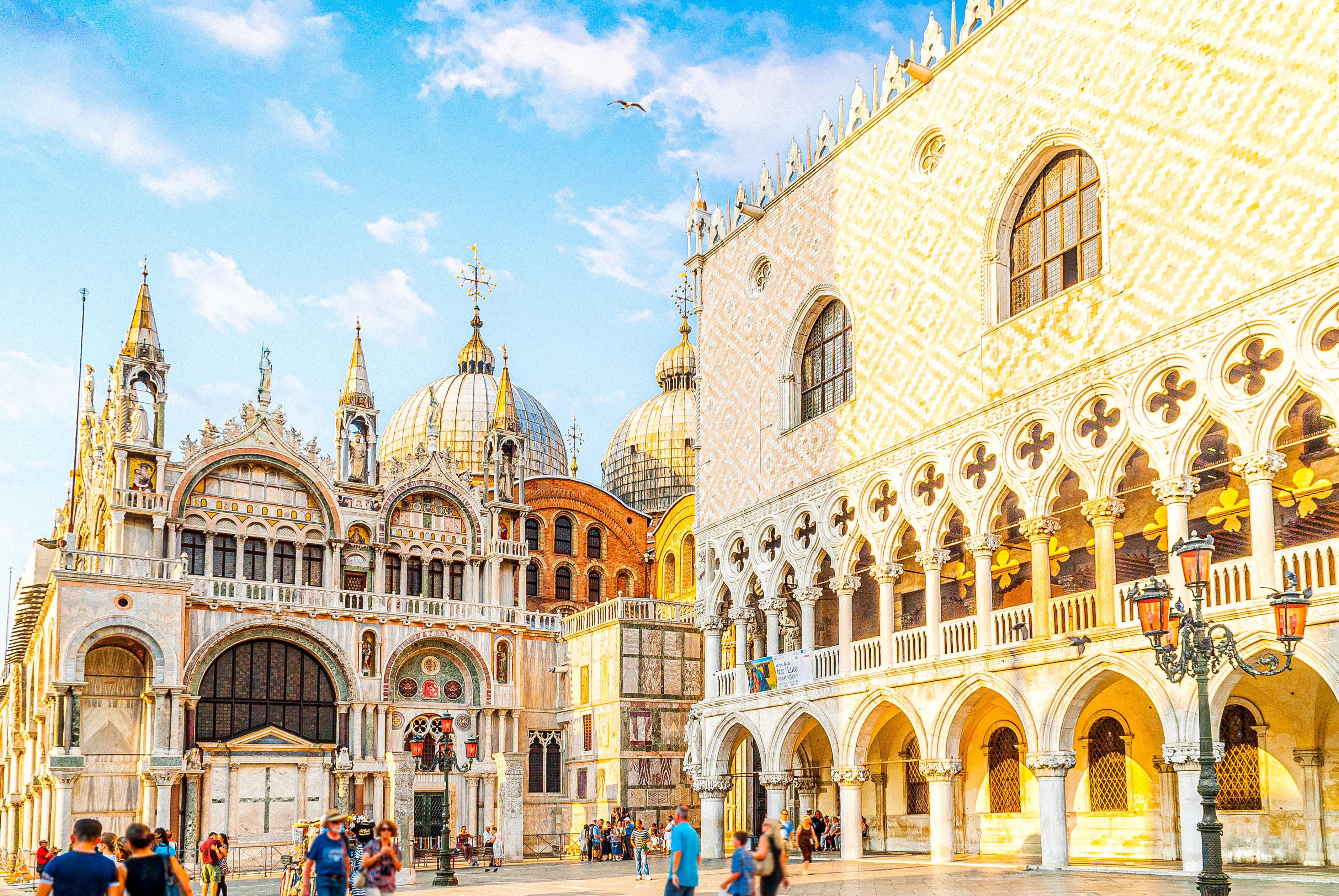
Gothic arcades above the lagoon, lead cells below the roof.
Compare fares, pick the fit — all bookings are mobile-voucher and eligible for free cancellation where shown.
2 hr
3 hr
Choosing the right Doge's Palace Tickets comes down to how much of the Palazzo Ducale you want to see beyond the main halls, and whether a costumed history of Casanova's cell and the torture room interests you. This St Mark's Square skip-the-line guide compares the three official access levels so you book once and book correctly.
| St Mark's Square Museums Ticket (Self-guided) |
Top pick Secret Itineraries Tour (Guided) |
Museum Pass (6-month, multi-museum) | |
|---|---|---|---|
| What's included | Doge's Palace, Correr Museum, Archaeological Museum, Marciana Library | All standard-ticket sites plus guided route through hidden chambers | Doge's Palace plus Venice's civic museums network |
| Guide required | — | ✓ (fixed tour time, small groups) | — |
| Access to restricted rooms | — | ✓ Casanova's cell, torture room, secret passages | — |
| Validity | Single-day entry | Fixed tour slot, same-day museum access after | Six months, one entry per museum |
| Best for | First-timers wanting the core palace visit | Visitors curious about Venice's darker political history | Multi-museum travelers spreading visits over months |
| See tickets & prices |
Verdict: First-time visitors should start with the standard St Mark's Square Museums ticket, upgrade to the Secret Itineraries tour for the palace's hidden rooms, and only choose the Museum Pass if a broader Doge's Palace Tickets tour across Venice's civic museums is on the itinerary.
Worth it for first-timers, skippable for repeat visitors
At 35 EUR, Doge's Palace Tickets cover more than one building: the Palazzo Ducale state rooms, the Bridge of Sighs and prison cells, plus admission to three further St Mark's Square Museums including the Museo Correr. Priced separately, those Venice landmarks would cost considerably more, so the arithmetic favours you if you actually use the extra entries rather than treating them as a bonus you never redeem. The Scala d'Oro, Tintoretto's Paradiso in the Sala del Maggior Consiglio and the Sala dello Scrutinio justify the fee on their own. Where visitors feel short-changed is expectation: the standard admission buys interiors, not rooftop or dome access, and the Piazza San Marco crush after 11:00 flattens the Gothic loggia's atmosphere. Guided Doge's Palace Tickets tours suit anyone who wants the Republic's political machinery explained; independent visitors get the same rooms for the same price. Arriving 09:00–10:30 protects the value you paid for.
Bottom line: Buy Doge's Palace Tickets tickets if you'll use the museum bundle and arrive early — otherwise your 35 EUR buys crowds you could have avoided.
Hand-picked experiences loved by thousands of travelers
1 - 2.5 hours
Free Cancellation
Skip the queues and step into Venice's golden basilica, grand palace and legendary bridge in one outing.
1.5 - 2.5 hours
Free Cancellation
Skip the lines at Venice's top icons—choose an audioguide visit, guided tour, or private experience.
Flexible - self-guided
Free Cancellation
Skip the lines into Doge's Palace, cross the Bridge of Sighs, and explore three museums at your own pace.
Self-guided, flexible pace
Free Cancellation
Skip the line into Venice's Doge's Palace, cross the Bridge of Sighs, and explore the prisons with an audio guide.
1 - 2 hours
Free Cancellation
Skip the line into Doge's Palace with an expert guide and cross the legendary Bridge of Sighs.
Flexible, self-paced (varies by option selected)
Free Cancellation
Skip-the-line access to St. Mark's Basilica and Doge's Palace, with an option to add the Bell Tower views.
5 hours
Free Cancellation
Navigate the Biennale's Giardini & Arsenale with a private art insider over 5 immersive hours.
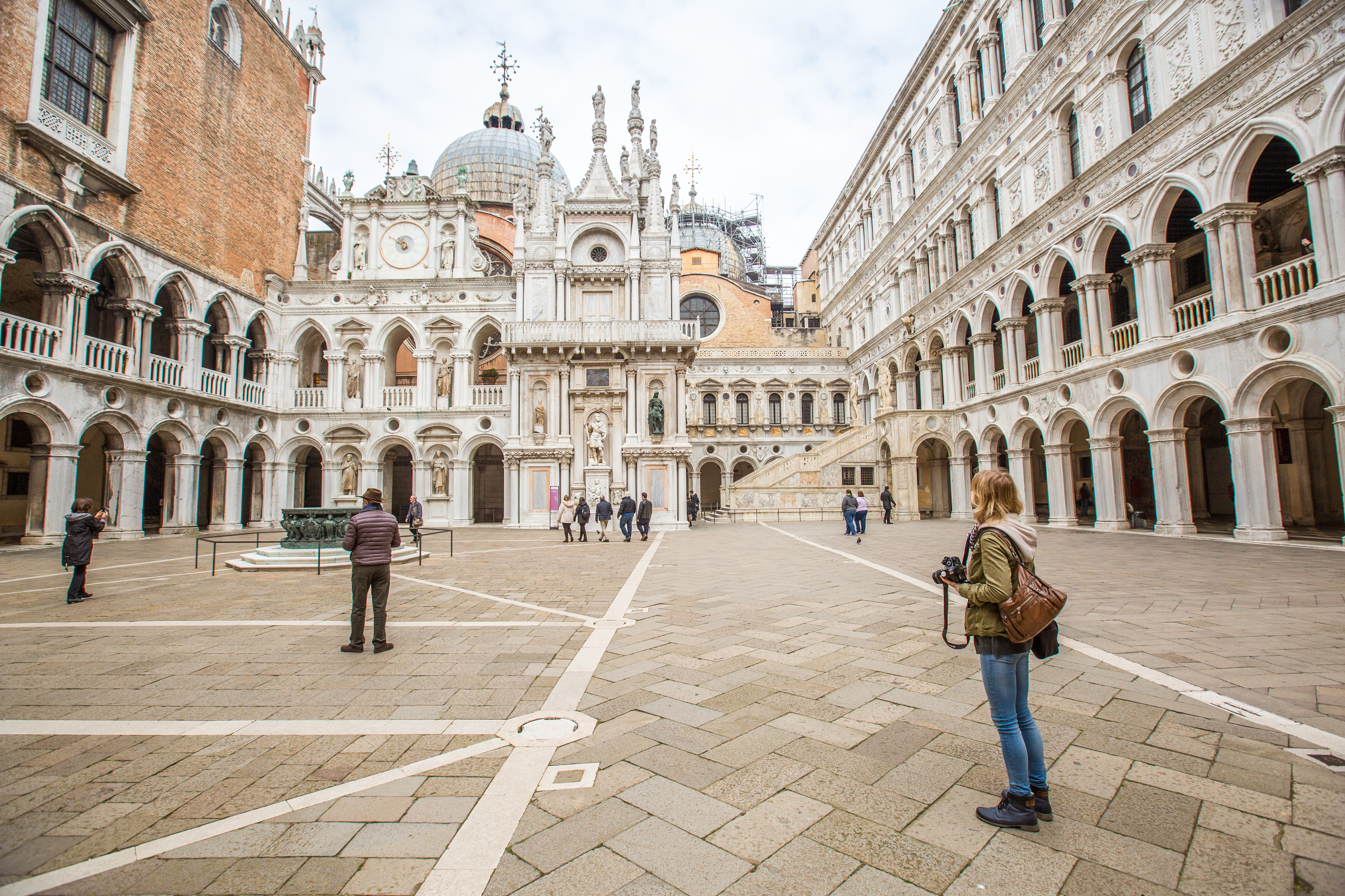
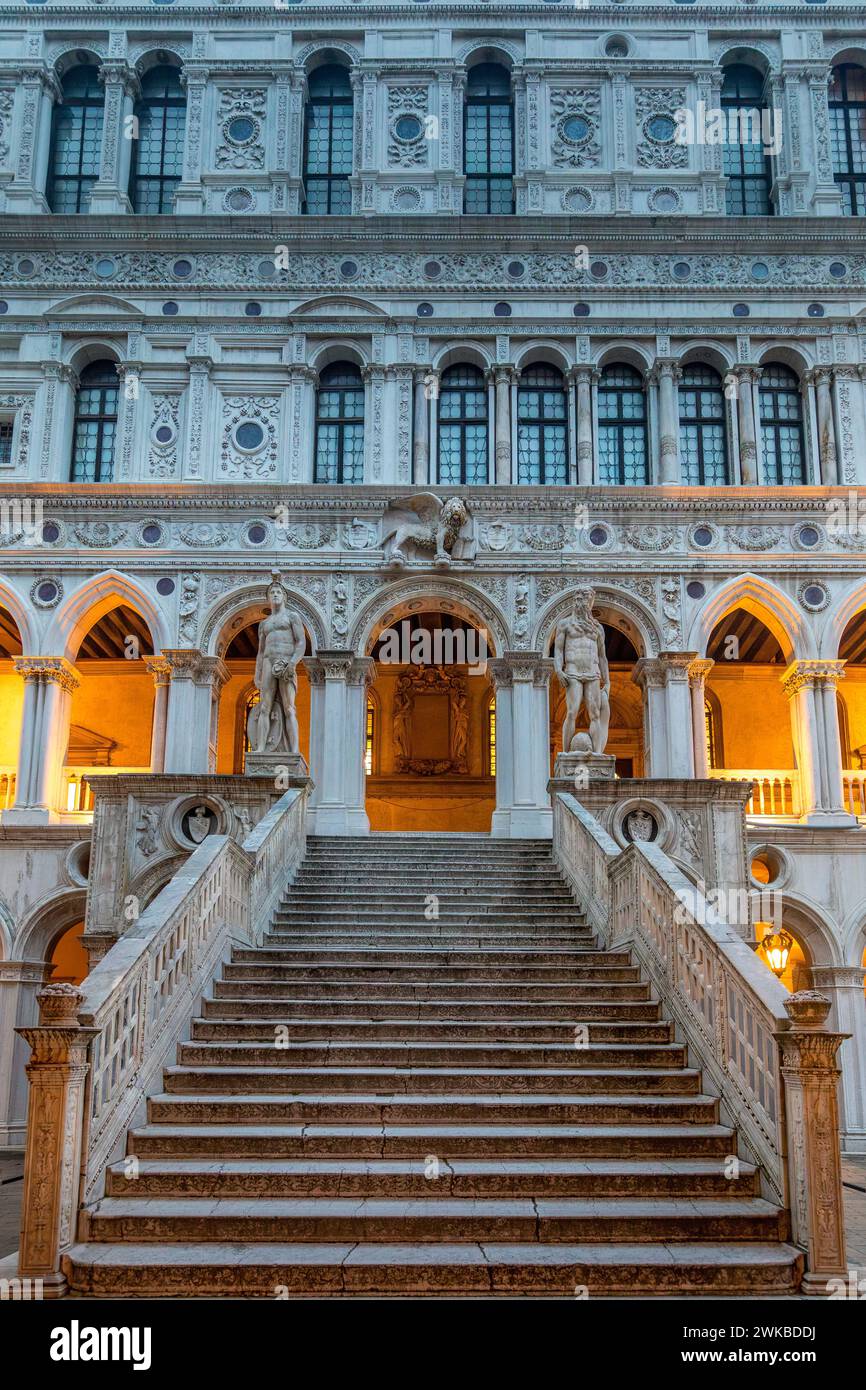
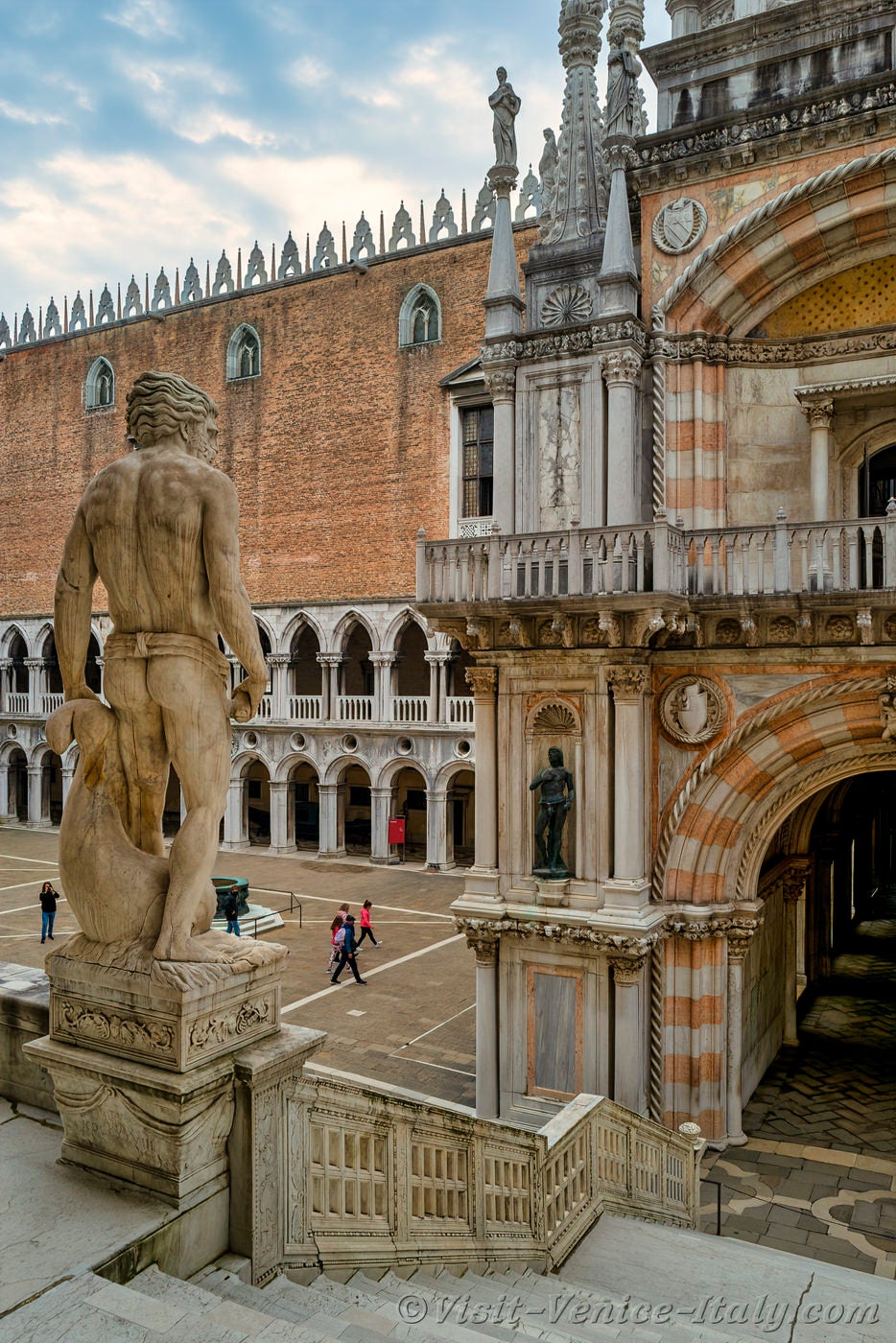
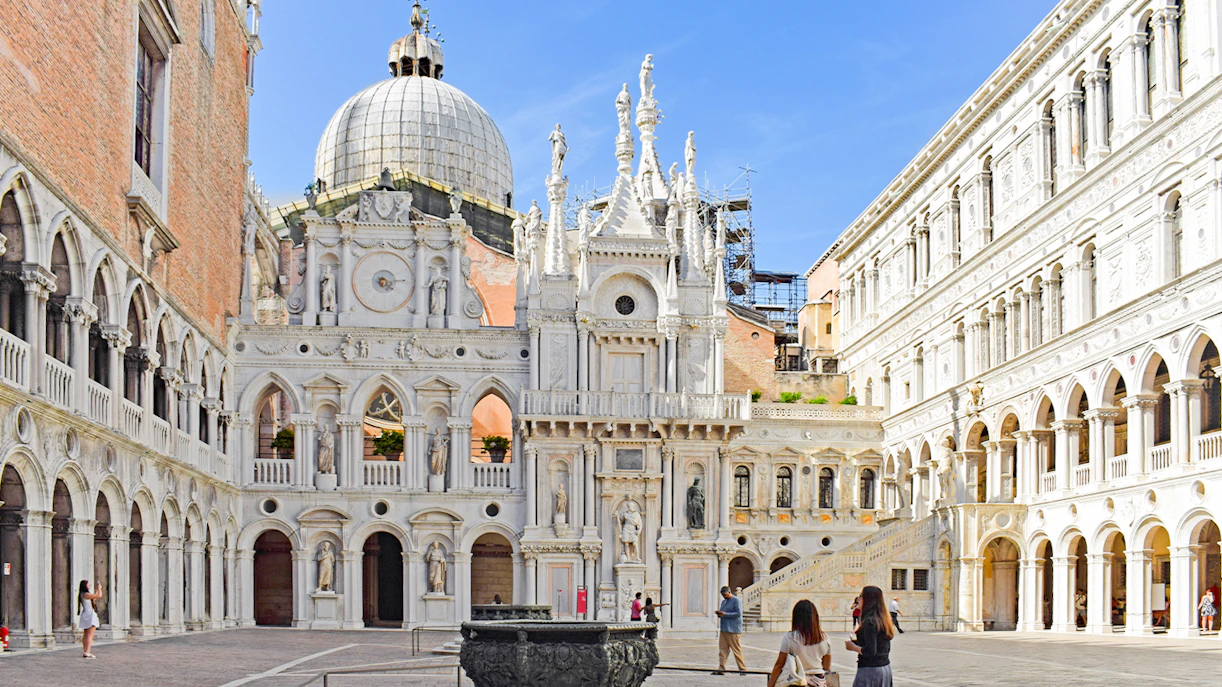
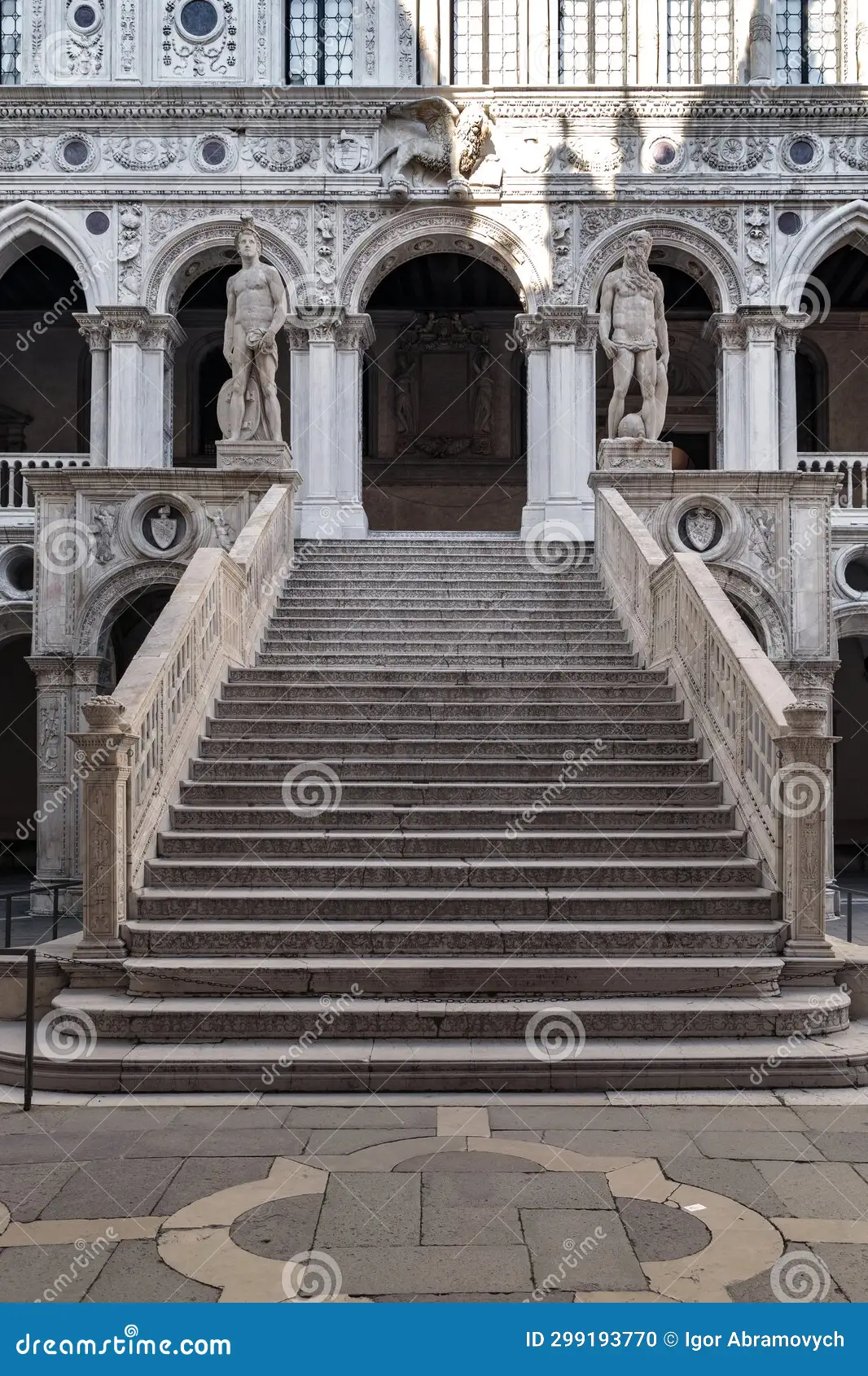
This 16th-century Mannerist staircase in the courtyard is flanked by two marble statues of Mars and Neptune standing over five meters tall, and it was here that newly elected doges were formally invested. Sculptor Jacopo Sansovino designed the statues to loom over arrivals, a deliberate trick to make the doge himself appear smaller during the ceremony.
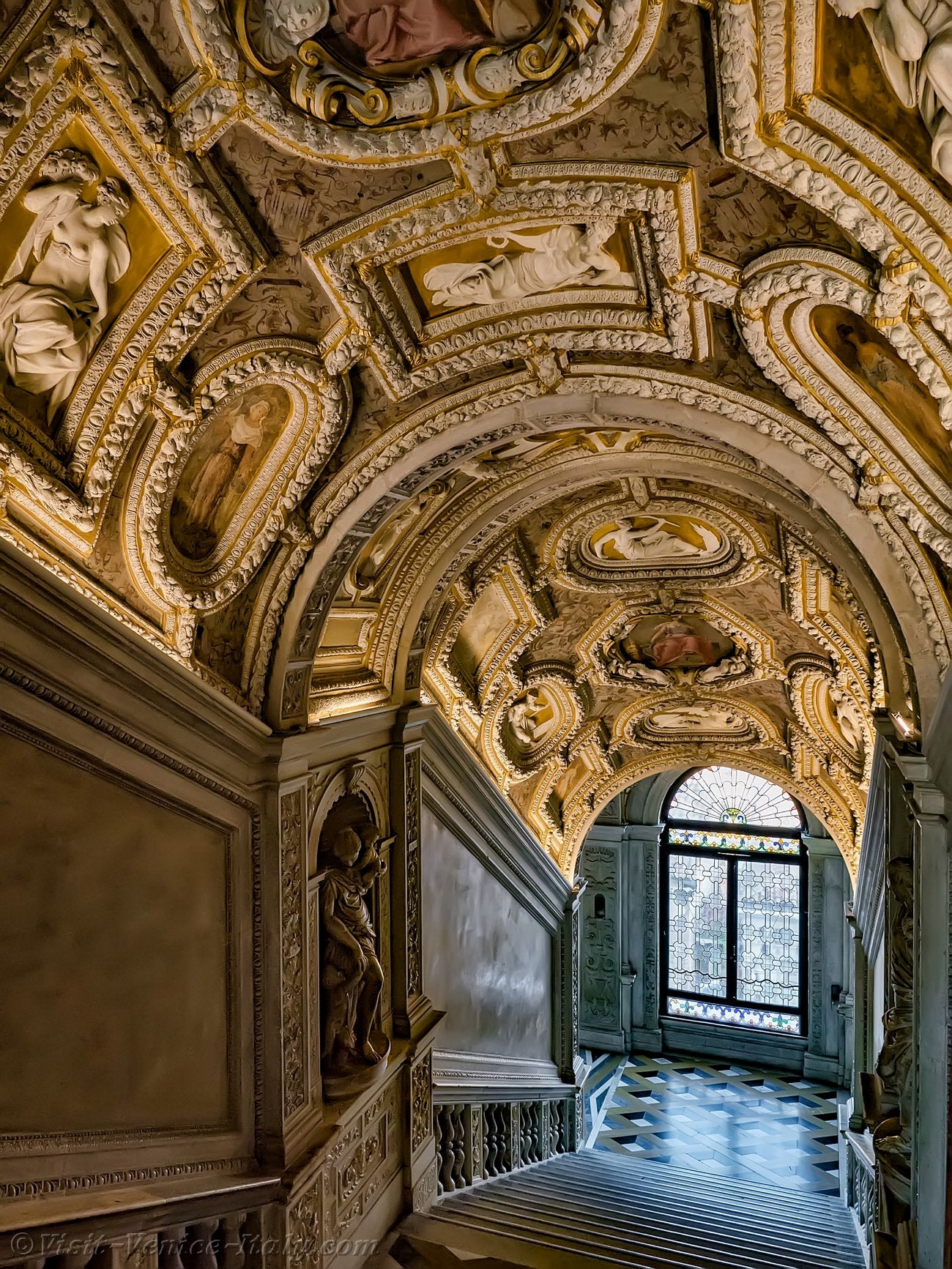
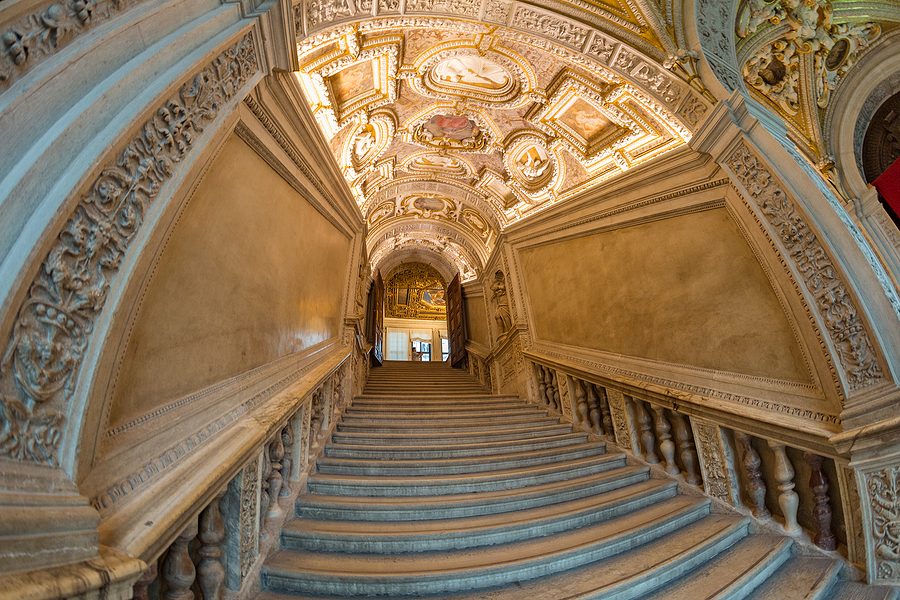
Known in Italian as the Scala d'Oro, this staircase is coated in gilded stucco and once served as the exclusive route for dignitaries heading to the Doge's private apartments. Its first flight is dedicated to Venus and its second to Neptune, symbolizing Venice's naval dominion.
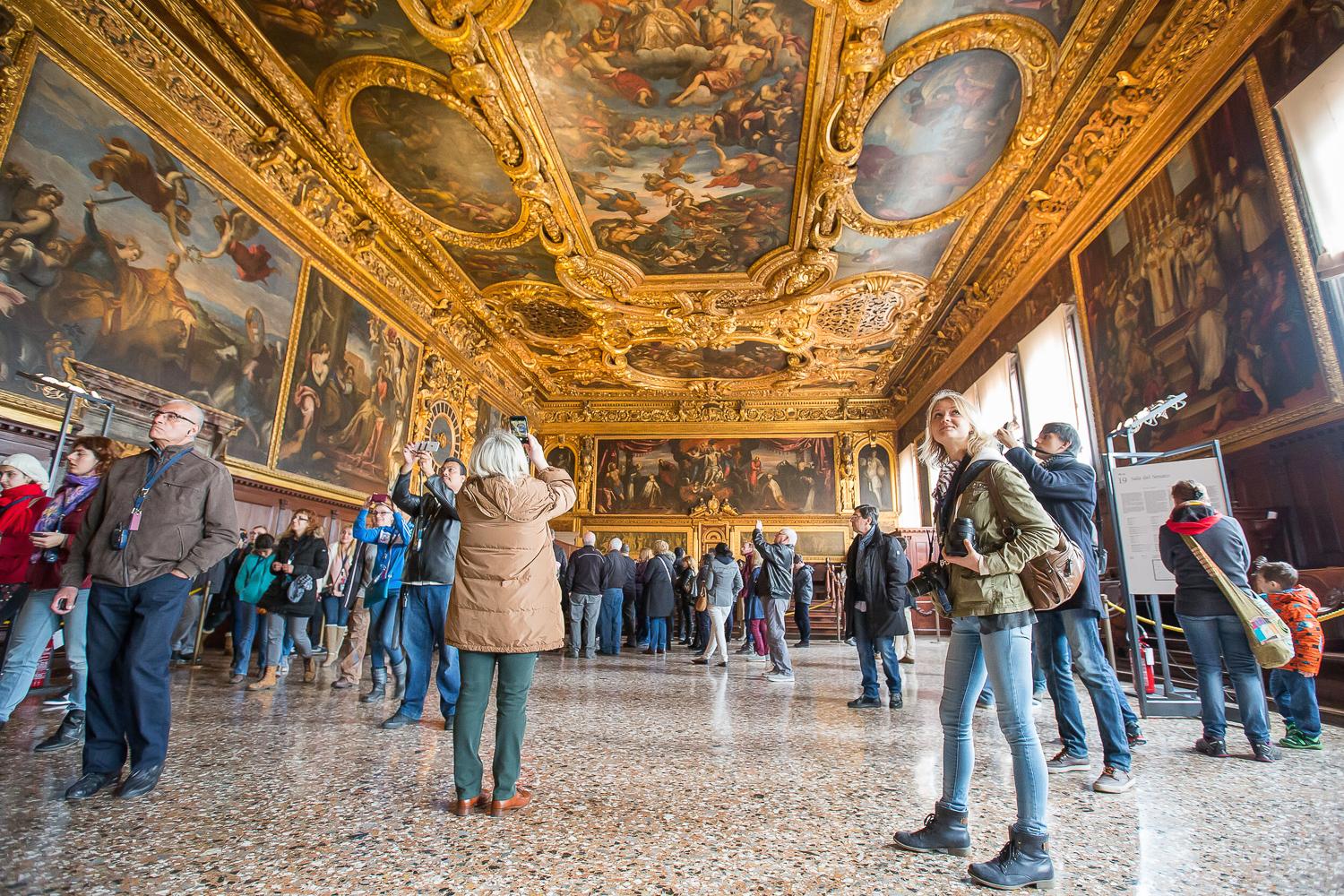
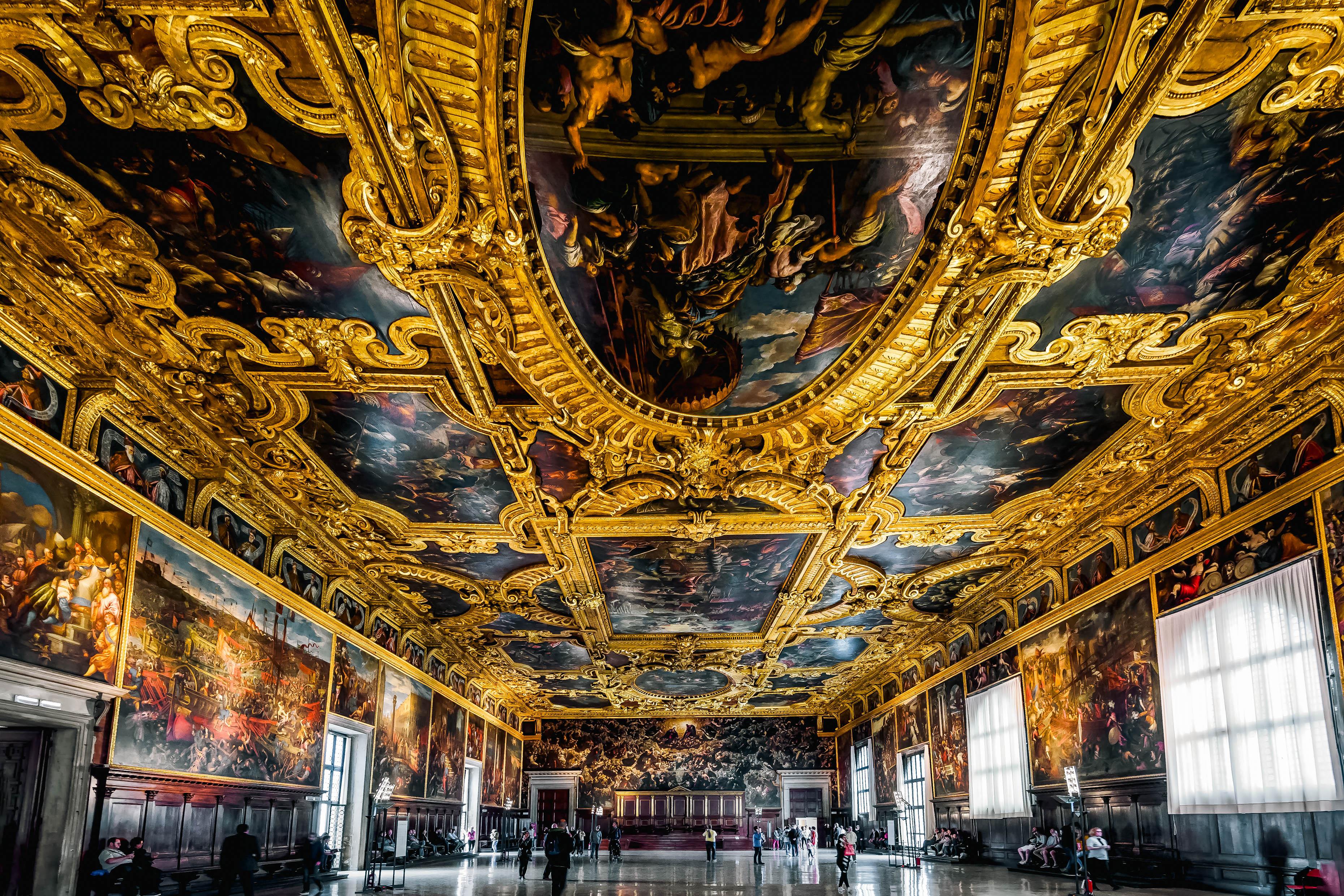
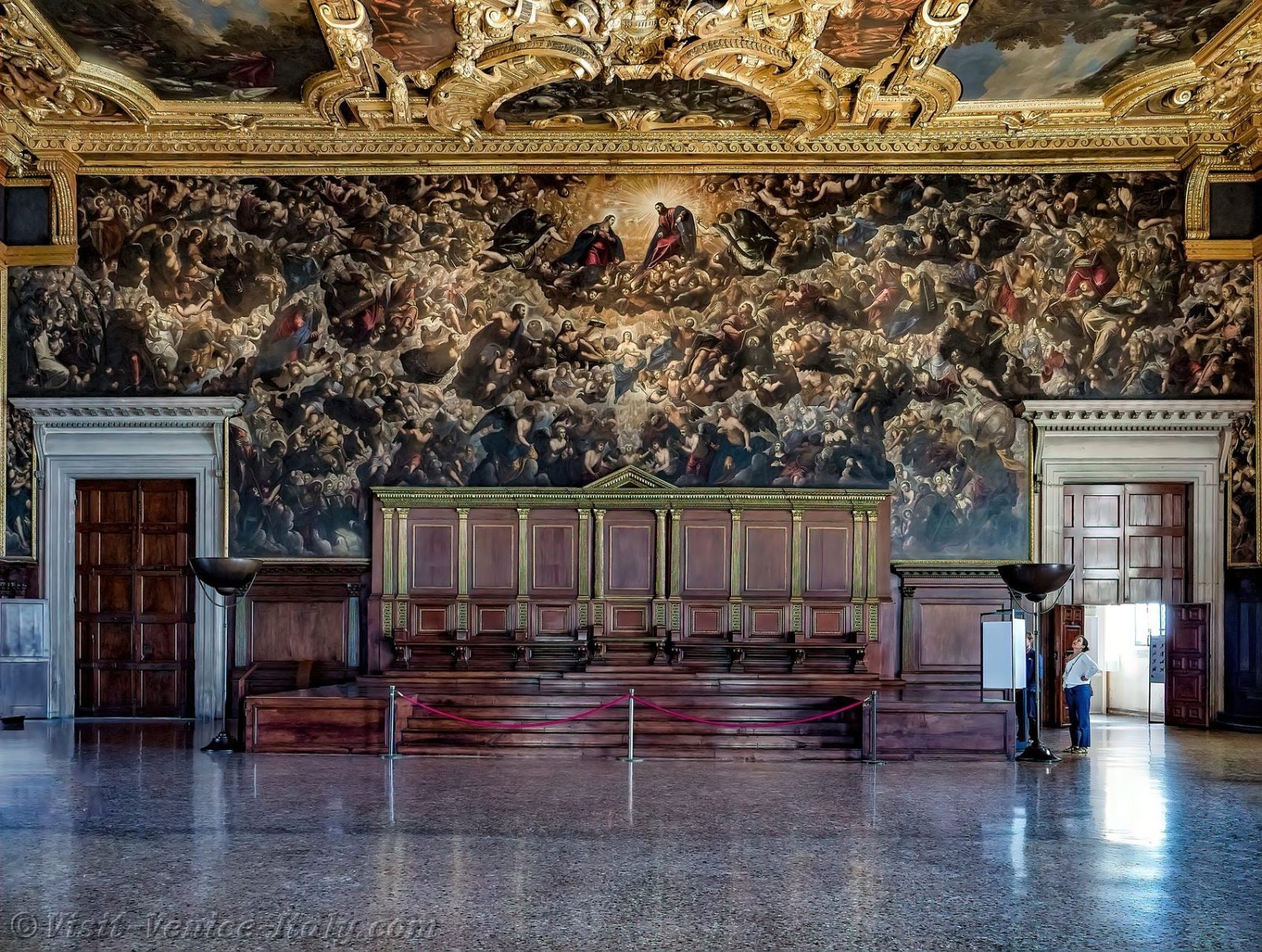
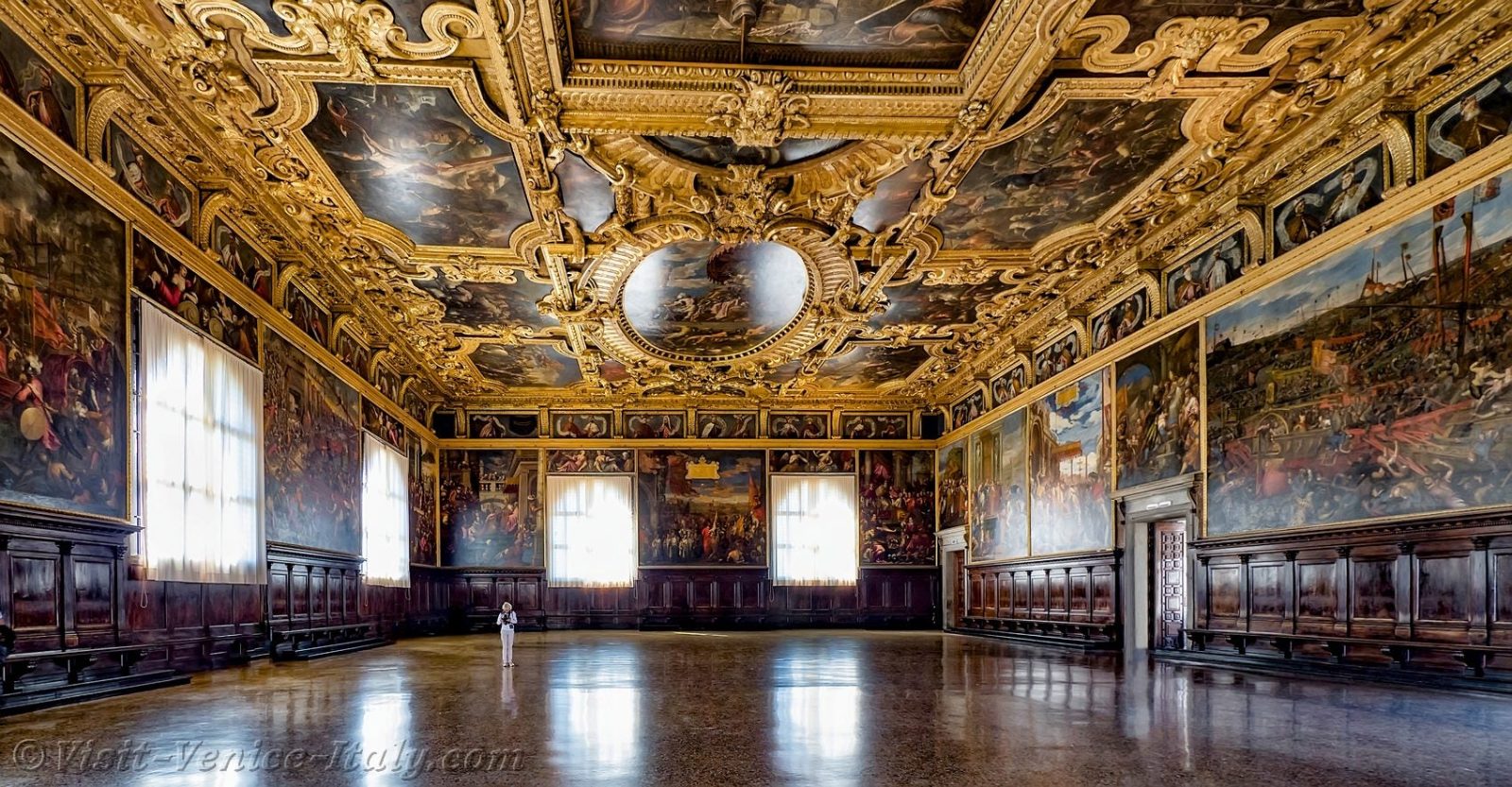
Sala del Maggior Consiglio was built to seat up to 1,800 voting nobles and holds Tintoretto's Paradise, a 22.6-meter canvas considered the largest oil painting on canvas in the world. A row of doge portraits lines the walls, with one painted black to mark Doge Marino Faliero, executed for treason.
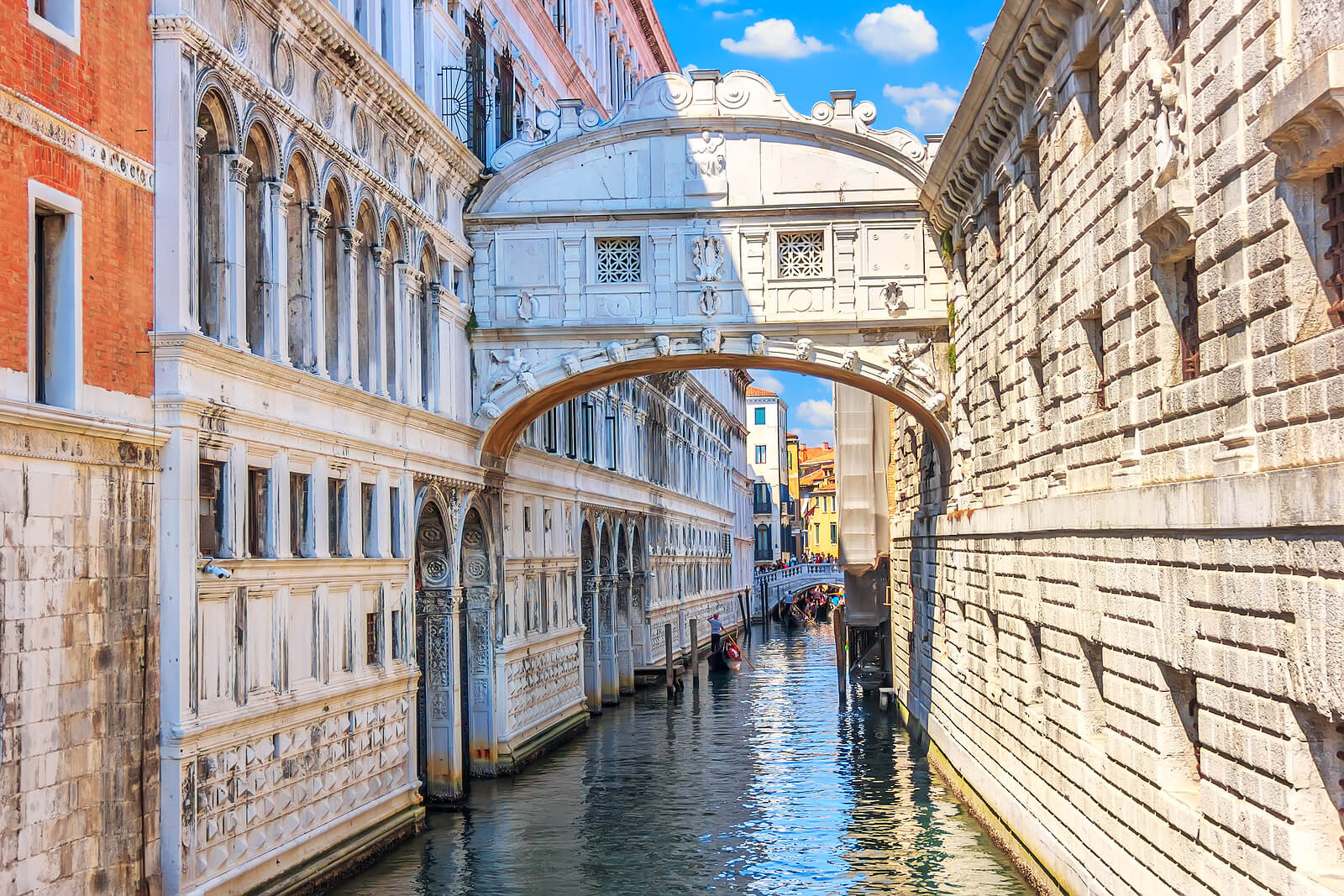
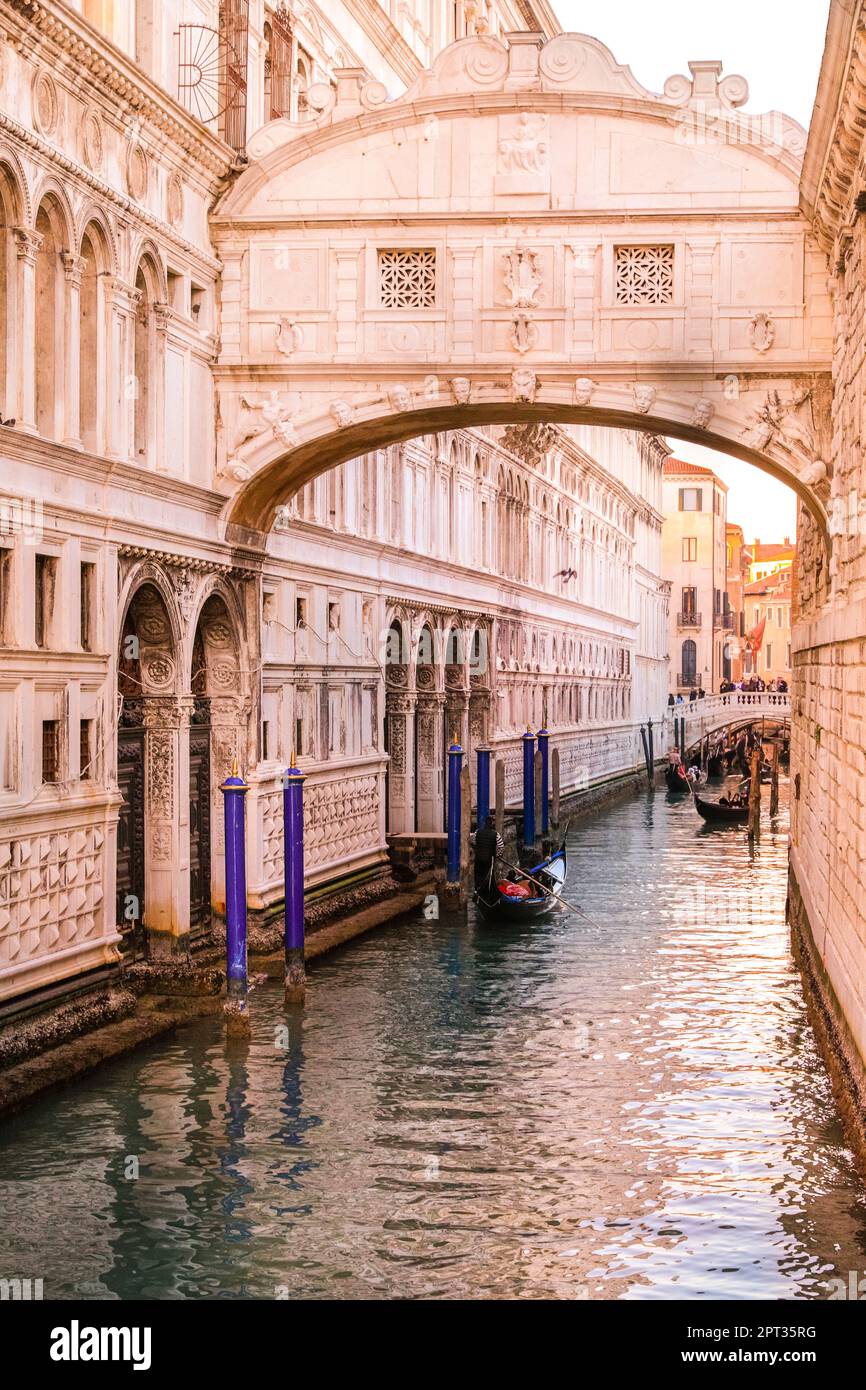
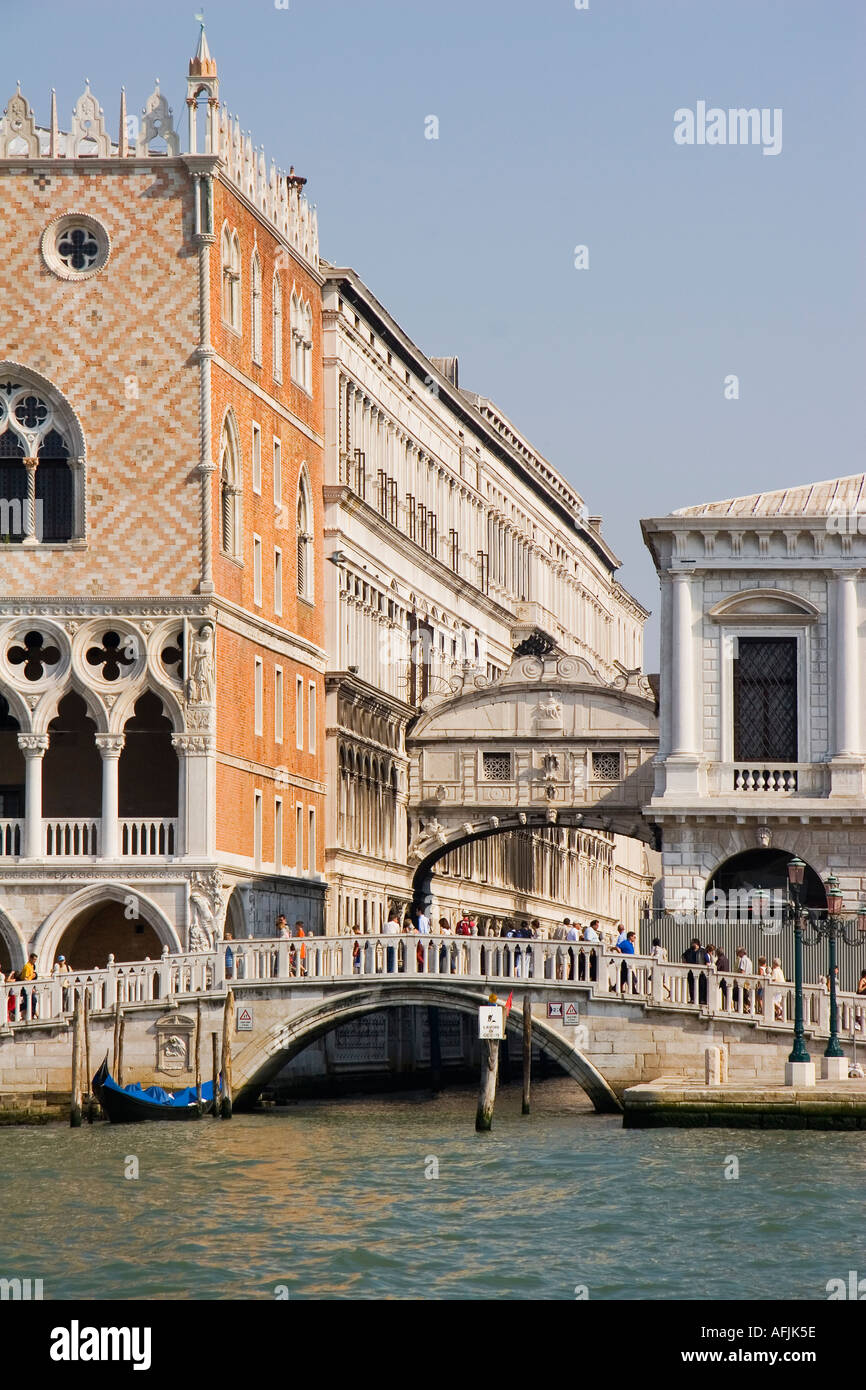
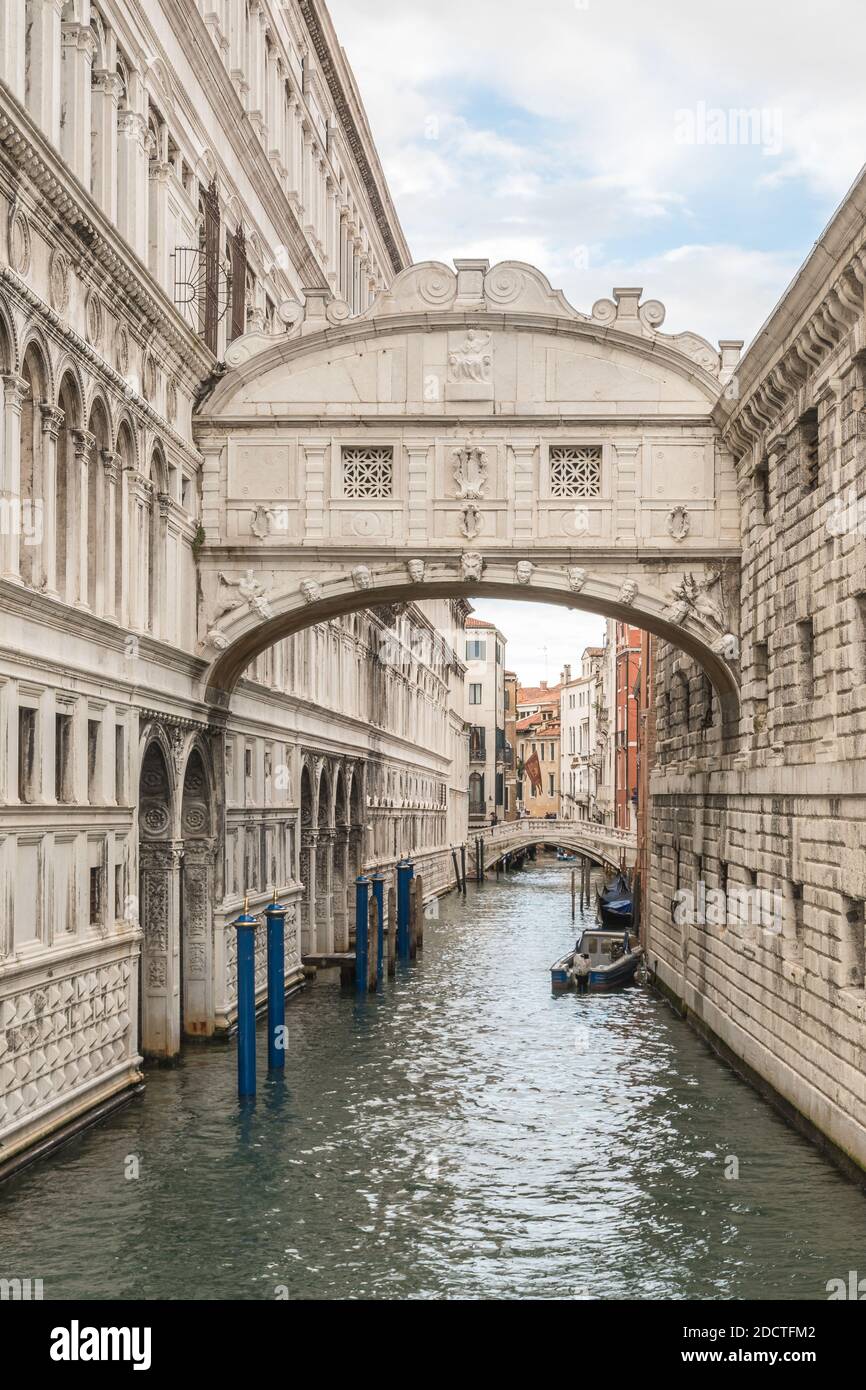
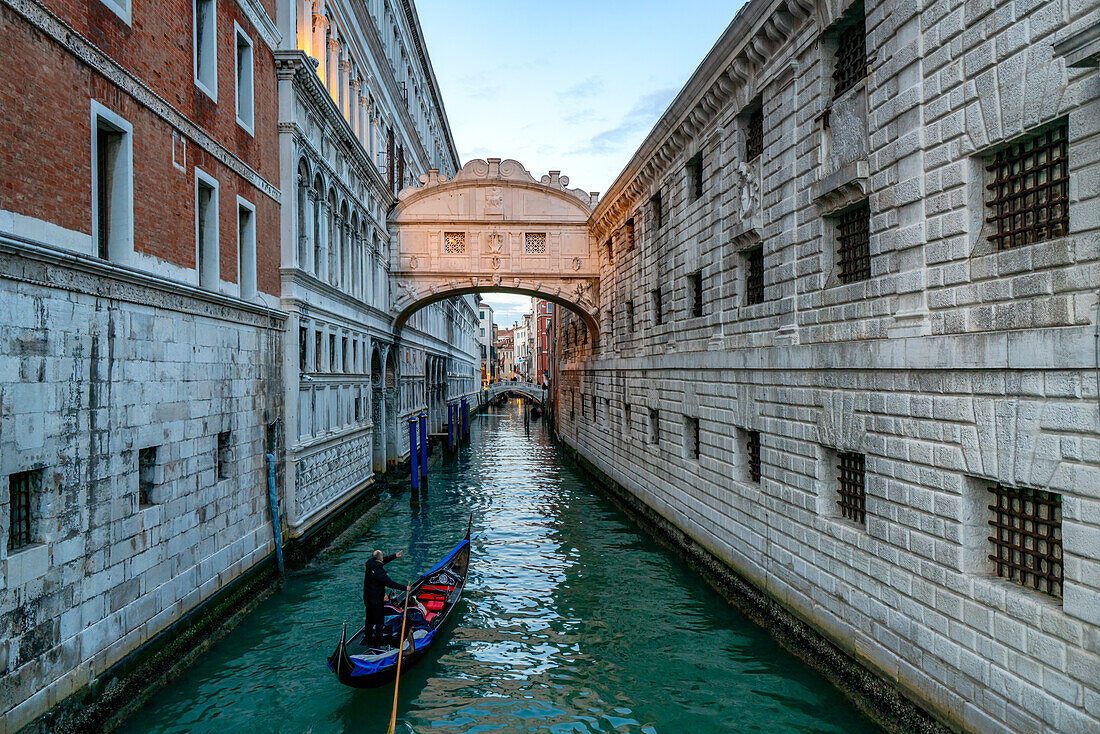
The Ponte dei Sospiri is an enclosed limestone bridge connecting the palace's interrogation rooms to the New Prisons across a narrow canal. Its small barred windows gave condemned prisoners their last glimpse of Venice, inspiring the bridge's melancholic name.
Built in the late 16th century across the canal from the main palace, these cells held prisoners in conditions so damp that stone walls still show water staining today. Giacomo Casanova was famously held here in 1755 before his celebrated escape.
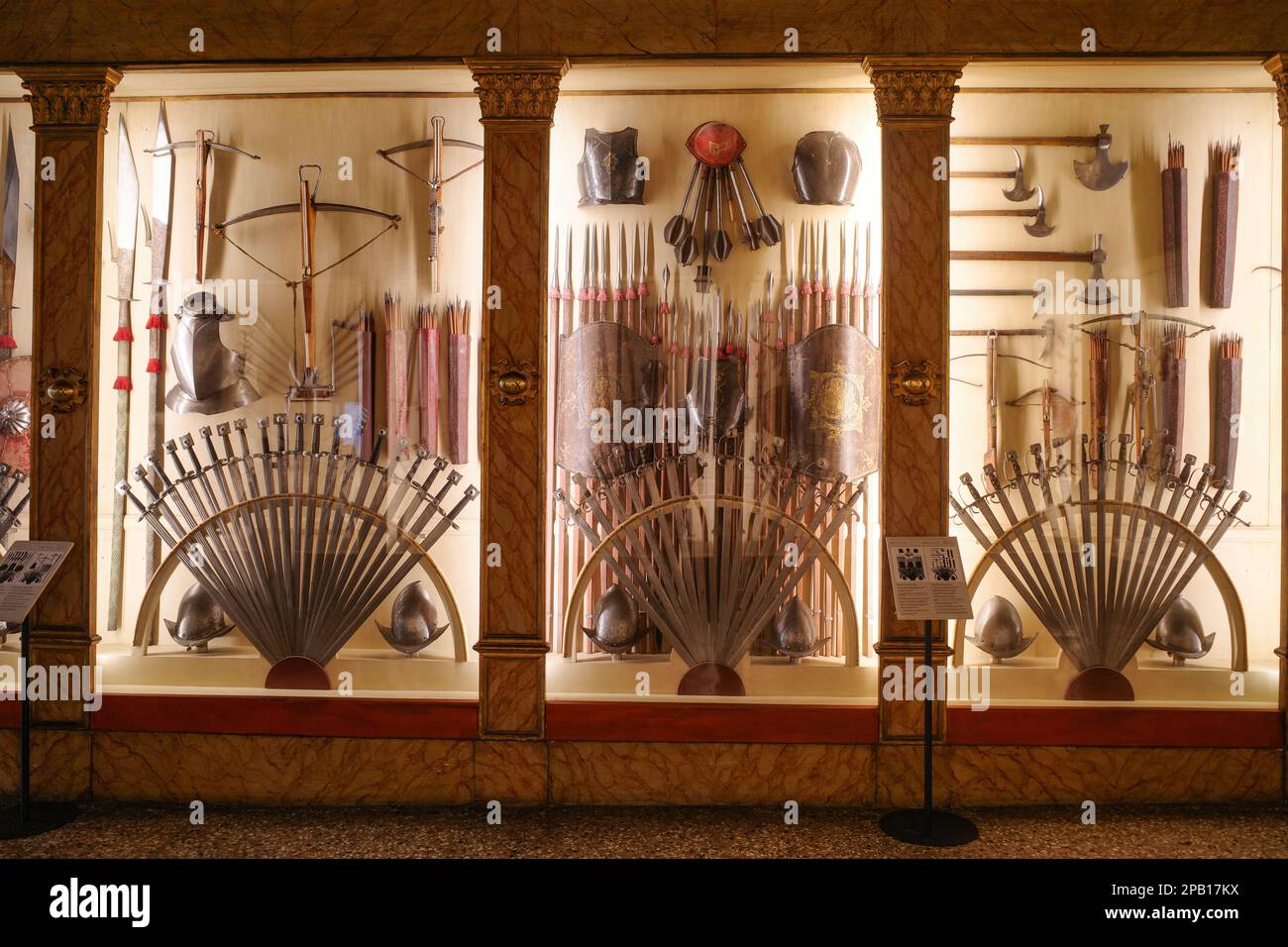
This collection houses several thousand pieces of historic weaponry and armor once used to equip the Republic's ceremonial guard and naval forces. Among the displays is a suit of armor reputedly linked to condottiero Francesco Morosini, alongside early firearms and Ottoman-era trophies.
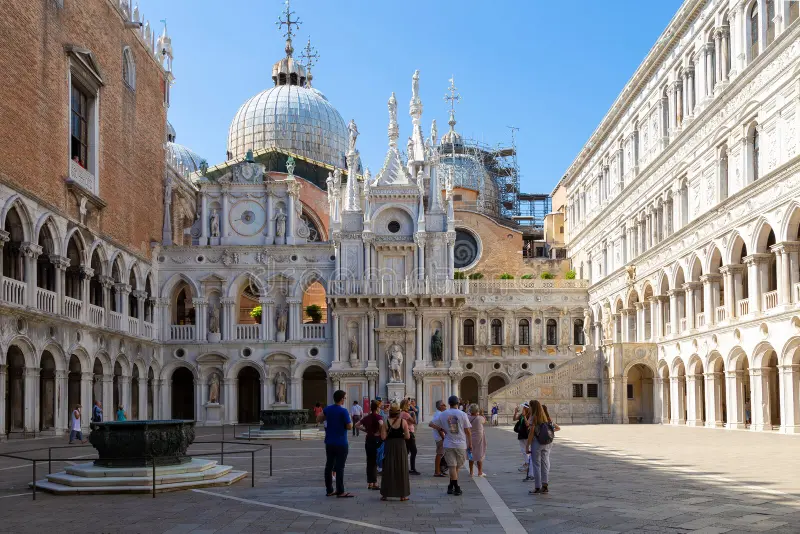
You arrive at the Porta del Frumento on the waterfront side, the lagoon at your back, and step into the courtyard before the crowds thicken. The Giants' Staircase rises ahead, Sansovino's Mars and Neptune flanking the top landing where doges were crowned.
You climb the Scala d'Oro, gilded stucco pressing close overhead, and emerge into the institutional floors. You move through the Anticollegio, then the Collegio, then the Senate chamber. You pause in the Sala del Maggior Consiglio, where the far wall dissolves into Tintoretto's massed figures and the ceiling forces your head back. You look for the blacked-out portrait in the frieze and find it on the north side.
Then the route descends. You cross the Bridge of Sighs through stone lattice, catching a narrow slice of the Rio di Palazzo, and drop into the prison cells — damp, low, scratched with graffiti that has outlasted the men who cut it. You come out at the courtyard again, blinking. A guided Doge's Palace Tickets tour adds the Piombi and the chancellery to that circuit. You leave through the museum shop and turn left, and the Piazzetta columns are twenty metres away.
All the details about your upcoming adventure in one place
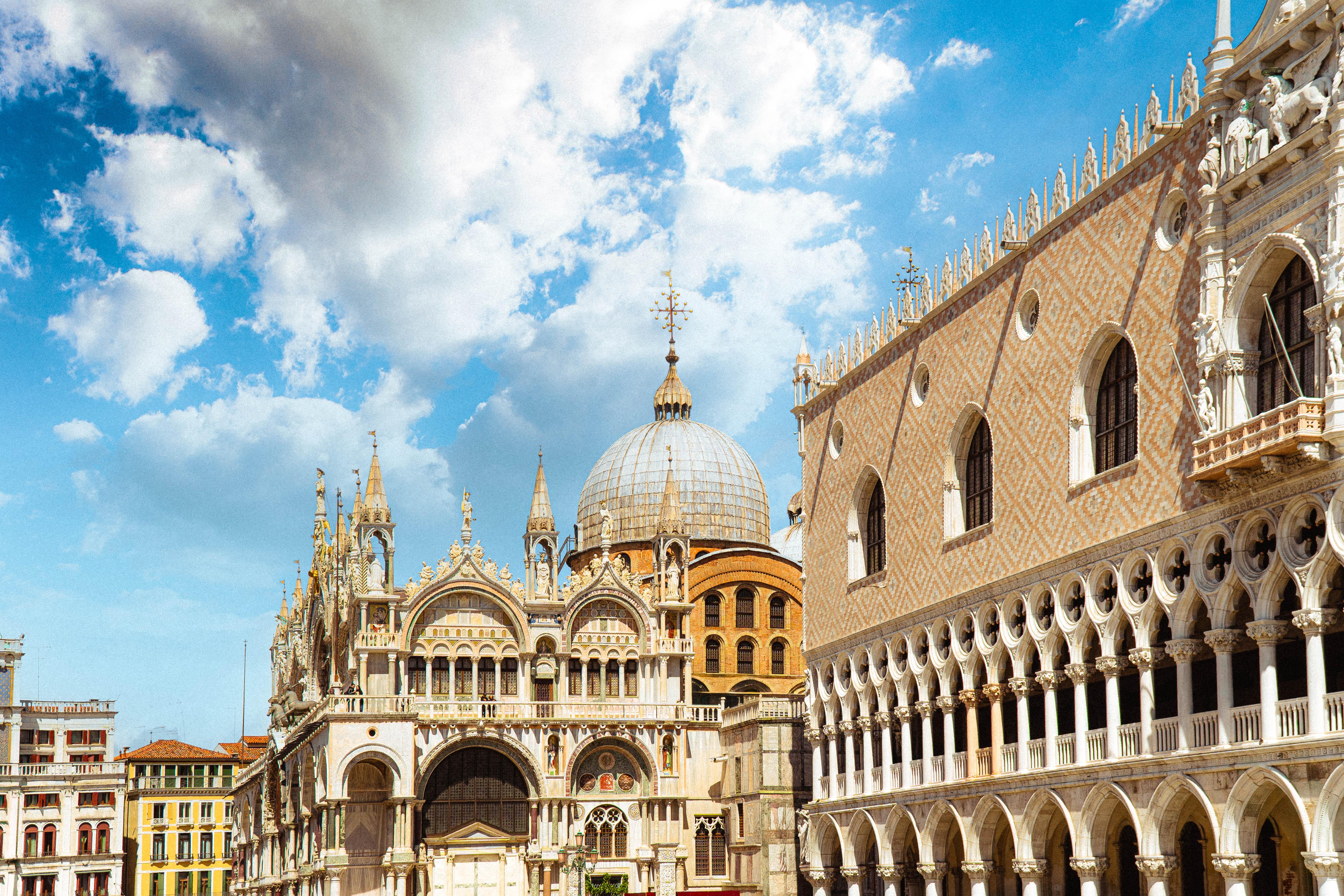
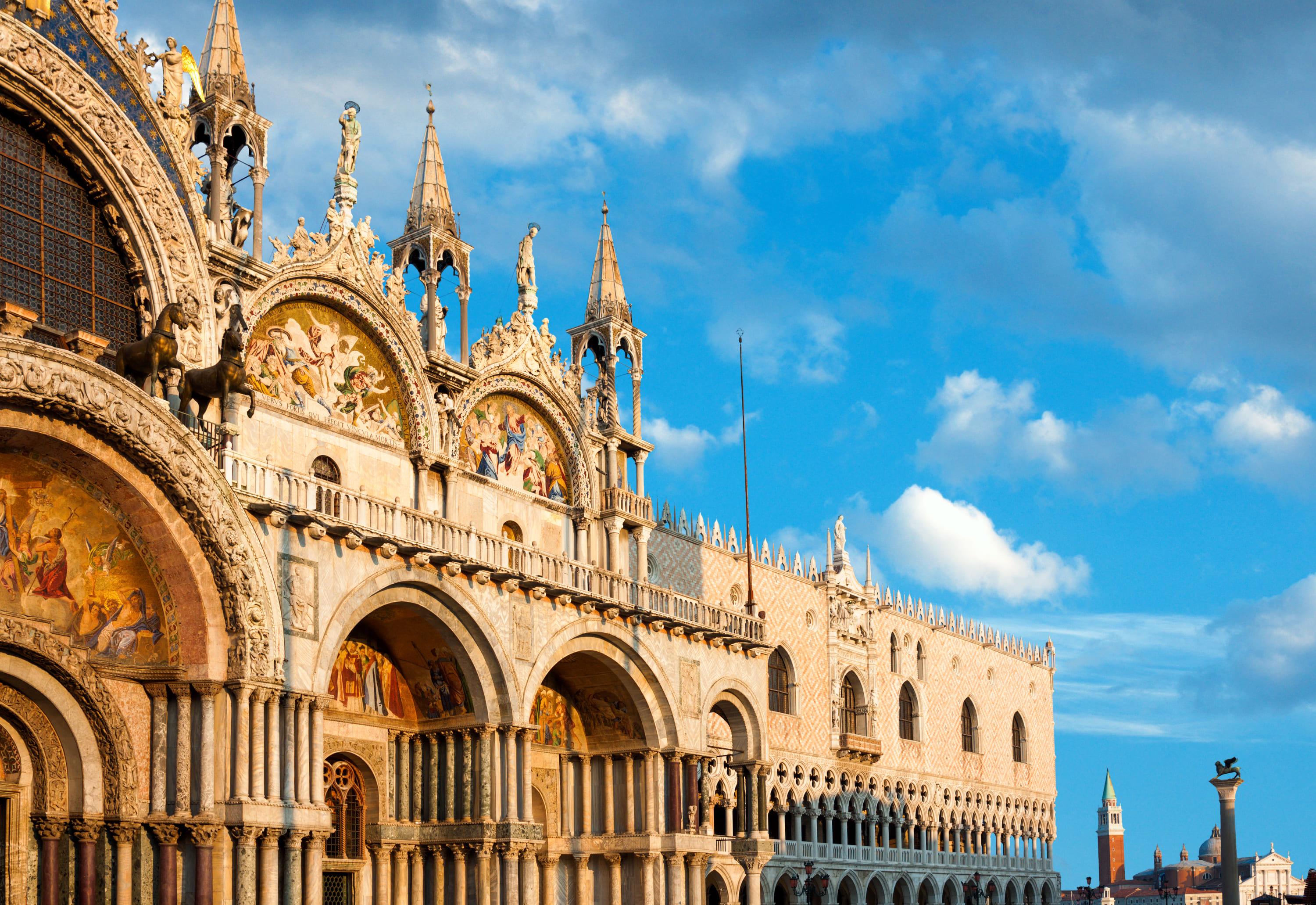
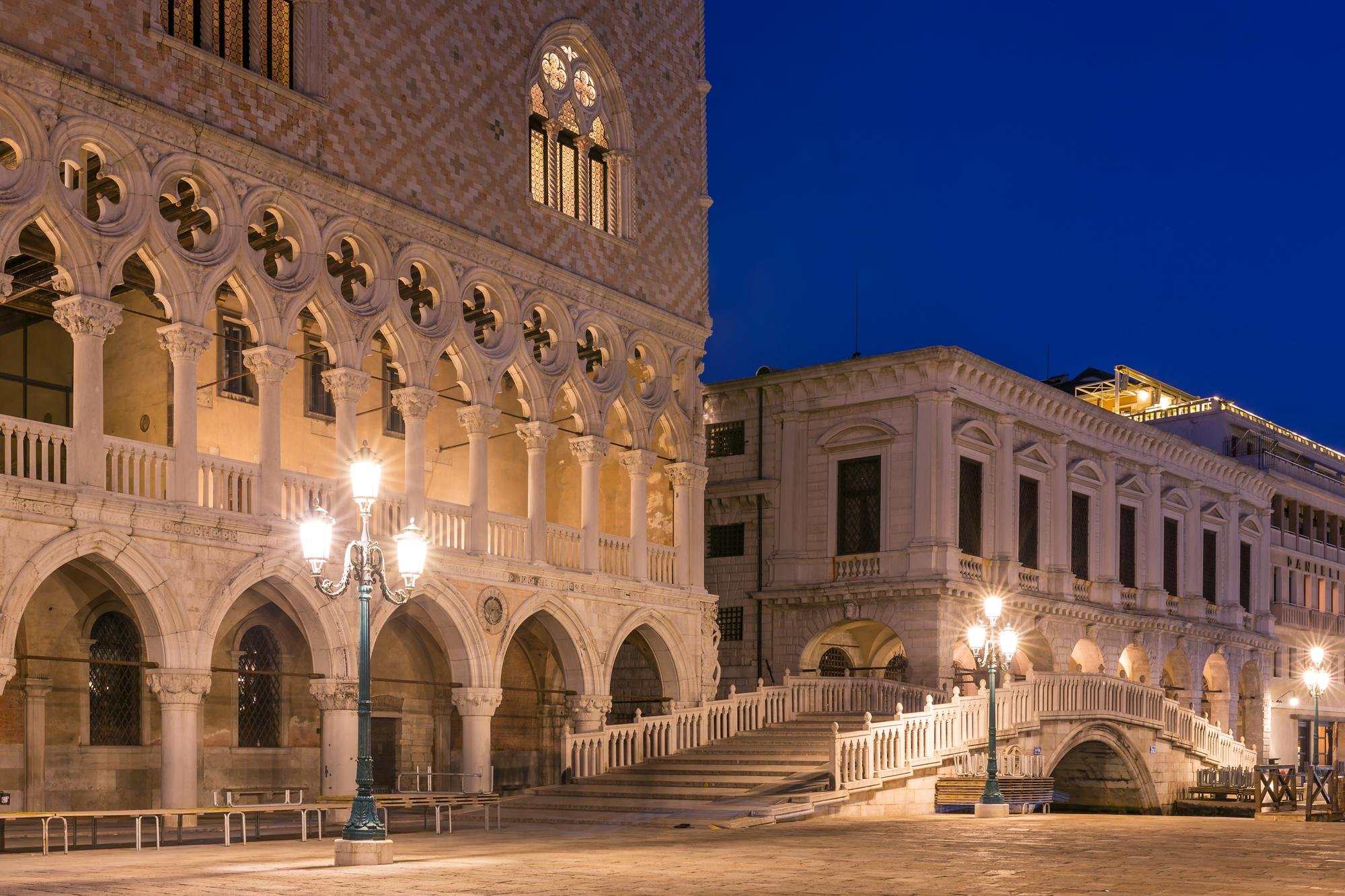
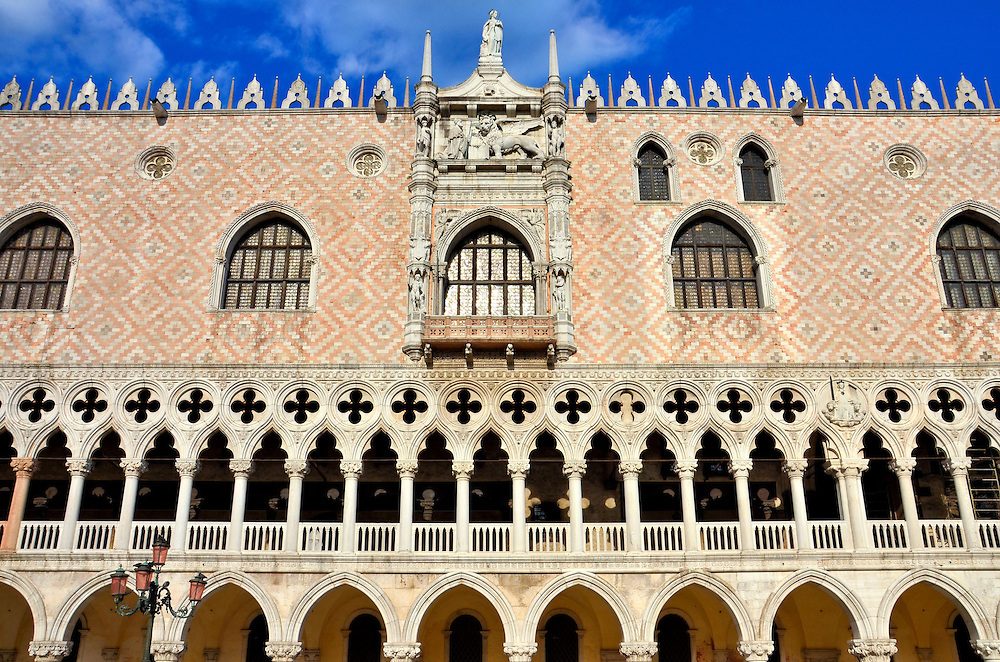
Palazzo Ducale rises over the lagoon in pink Veronese marble, its arcaded Gothic façade opening onto courtyards, the Golden Staircase and the Chamber of the Great Council, where Tintoretto's Paradise covers an entire wall. Doge's Palace Tickets cover the state apartments, the Institutional Chambers, the armoury and the Bridge of Sighs leading to the New Prisons across the canal. Guided Doge's Palace Tickets tours add context on the Republic's councils and the doge's ceremonial role, while audio guides suit travellers who prefer to wander at their own pace.
The palace that governed a thousand-year republic has no throne room. Power in Venice was deliberately distributed, and the building reflects that: chambers for councils, chambers for committees, chambers for tribunals, but no single seat of a single ruler.
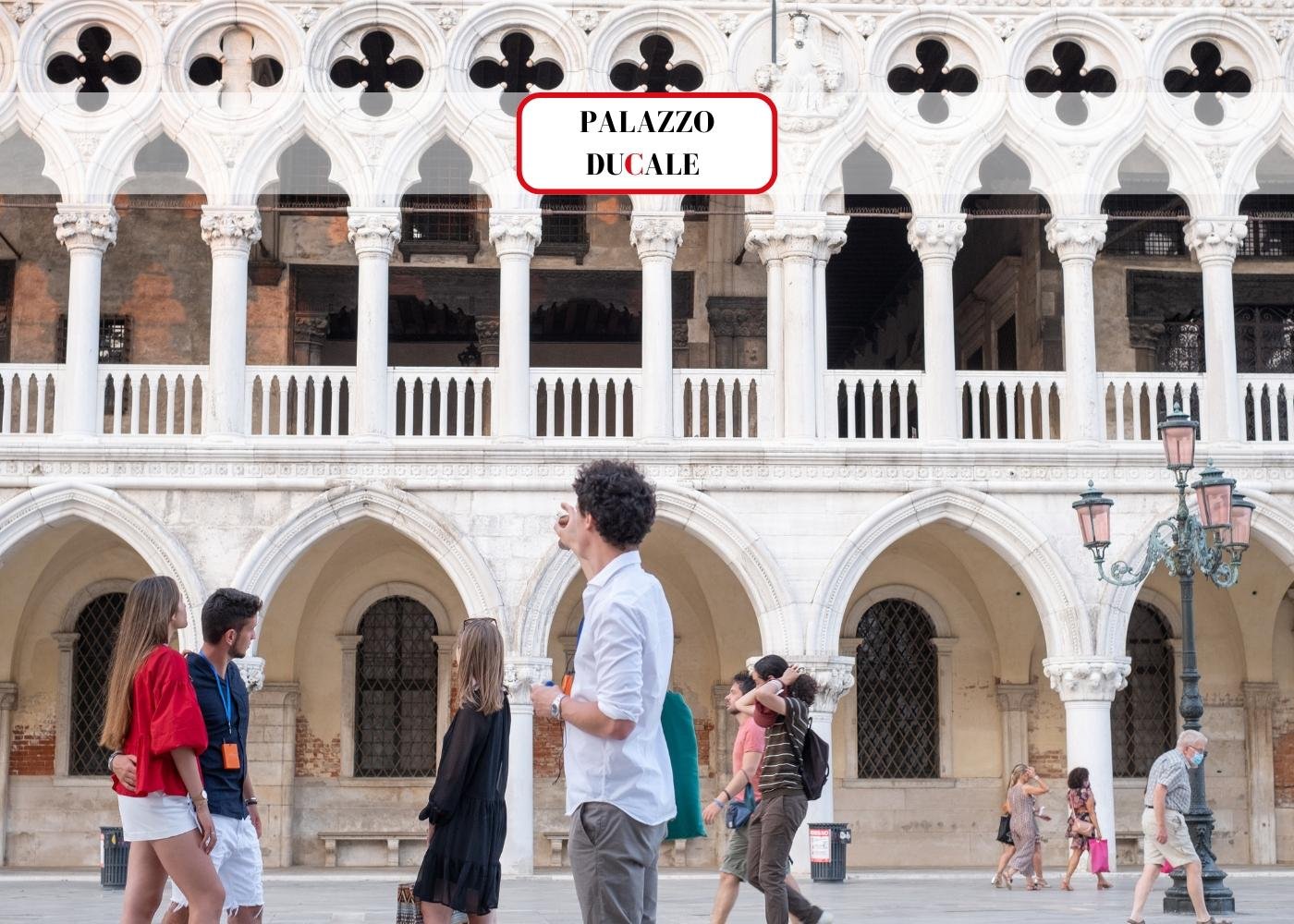
Palazzo Ducale stands at San Marco 1, on the edge of the lagoon where the Grand Canal opens into the basin. The present structure is largely fourteenth and fifteenth century, raised after fires destroyed earlier fabric. Its inversion of expected mass is the first thing visitors register. Heavy stone sits on top; open arcades of Istrian limestone carry it. The lower loggia is pierced light, the upper wall a lozenge pattern of white and pink marble. Ruskin called the capitals of the ground-floor columns the finest secular carving in Europe, and their subjects — trades, virtues, the ages of man — served as public instruction for a city that read its buildings.
Inside, the scale changes register. The Sala del Maggior Consiglio measures roughly fifty-three metres and once seated over a thousand patricians. Tintoretto's Paradiso covers the end wall, among the largest canvases ever painted on a single surface. Above the tribunal runs a frieze of doge portraits, one of them blacked out: Marin Falier, executed for conspiracy in 1355, replaced by a painted curtain. Veronese's ceilings in the Sala del Collegio and the Anticollegio carry the republic's allegories of justice and concord, painted for an audience of ambassadors kept waiting. Those who arrive with Doge's Palace Tickets pass through rooms designed to intimidate before a word was spoken.
The building also holds its own machinery of punishment. The Bridge of Sighs, completed around 1600, links the interrogation rooms to the Prigioni Nuove across the Rio di Palazzo. The Piombi, the lead-roofed cells beneath the attic, held Casanova until his escape in 1756. Secret Itineraries routes reach the chancellery and the torture chamber, spaces closed to standard circulation and best approached on a guided Doge's Palace Tickets tour.
The palace matters now as more than a monument. It anchors the St Mark's Square Museums system and functions as a working museum of Venetian government, with the Museo dell'Opera displaying original capitals removed during nineteenth-century restoration. UNESCO listing covers the whole of Venice and its lagoon; the palace is its civic heart. Among Venice landmarks it remains the clearest surviving argument for how the republic understood itself — mercantile, legalistic, theatrical, and permanently anxious about power. Doge's Palace Tickets tickets grant access to a structure that was, for centuries, the argument itself.

Power in Venice was deliberately distributed, and the building reflects that.
There is no formal dress code for Doge's Palace Tickets, but as the palace sits beside St Mark's Basilica, many visitors dress modestly with shoulders and knees covered out of respect for the adjoining sacred site. Comfortable flat shoes are recommended, since the visit route crosses uneven marble courtyards, the Giants' Staircase, and the narrow stone floor of the Bridge of Sighs.
All visitors pass through an airport-style security check at the Porta del Frumento entrance in the Piazzetta San Marco, with bag scanning and metal detection. Bags larger than a small daypack, and any wheeled luggage, must be left at the free cloakroom near the ticket entrance before proceeding into the courtyard.
Non-flash photography for personal use is permitted throughout the courtyard, state rooms, and the Bridge of Sighs. Flash, tripods, monopods, and selfie sticks are prohibited in the Hall of the Great Council and other rooms holding Tintoretto and Veronese canvases to protect the paintings.
Children aged 6 to 14 qualify for reduced-rate entry, and a baby-carrier loan is available at the cloakroom for infants. Stroller access is limited in the older prison wing, so many families use a front or back carrier for that section.
The main visitor route, including the courtyard, Golden Staircase area, and Hall of the Great Council, is served by a lift and ramps for wheelchair users. Some sections, notably the Bridge of Sighs corridor and the New Prisons, involve narrow stone stairways that are not wheelchair accessible, so staff can advise on the best alternate route on arrival.
No eating or drinking is allowed inside the exhibition rooms or courtyard of Doge's Palace Tickets, though a small café-bar with seating operates near the Museo Correr side of the museum complex. Refillable water bottles are permitted, and there is a drinking fountain accessible from the courtyard.
Last admission 18:00
Quietest weekday for Doge's Palace Tickets
Mid-week, moderate flow
Cruise-ship days can add crowds
Summer late opening some Fridays to 23:00
Busiest day, arrive early
Hours
09:00–19:00 daily, every day of the week
Opening hours
09:00 – 19:00
Getting there
City-center access via metro and bus
Accessibility
Most experiences are wheelchair-friendly — check individual tours
What to bring
Comfortable shoes, water, phone for mobile voucher
Public transport · 20–30 minutes · Approx. 9.50 EUR single ACTV fare
Take vaporetto line 1 or 2 from Venezia Santa Lucia station along the Grand Canal to the San Zaccaria or San Marco stop, a short walk from the palace entrance.
Standard entrance tickets to the St Mark's Square Museums, priced at 35 EUR, can be cancelled free of charge up to 24 hours before the visit date for a full refund. Tickets cancelled within 24 hours of the scheduled entry, or no-shows, are generally non-refundable.
Recommended time
2-3 hours
Budget 2-3 hours for the standard self-guided route through the courtyard, state apartments, and Chamber of the Great Council; add the Secret Itineraries tour and the total climbs to roughly 3.5-4 hours, since that guided add-on alone runs 60-90 minutes before you loop back through the main halls. Arriving in the 09:00-10:30 window keeps the pace brisk, since queues at the ticket counter and bottlenecks at doorways are shortest right after opening. Book Doge's Palace Tickets online in advance to skip the line entirely, and treat the 2-3 hour estimate as a floor, not a ceiling, if you plan to linger over the Tintoretto-filled council chamber.
Crowd levels through the day
Weather · crowds · average price — dots go green to amber to red as each metric rises.
March through May brings mild temperatures around 15–20°C and thinner queues than summer, though Easter week and the Venice Carnival aftermath period can still draw crowds. Mornings right at opening remain the calmest window.
Purchasing the 35 EUR ticket in advance through the official site secures a specific entry window and avoids the ticket-office line at the Porta del Frumento.
Piazzetta San Marco, San Marco 1, 30124 Venezia
Main visitor entrance and security checkpoint, facing the lagoon
Get directionsThe building that draws holders of Doge's Palace Tickets across the Piazzetta began as something far plainer. A fortified ducal castle stood on this site by the early ninth century, after the seat of government moved from Malamocco to the Rialto islands around 810 under Doge Agnello Participazio. Fire destroyed it in 976 during the uprising against Doge Pietro IV Candiano. Rebuilding followed, then further reconstruction under Sebastiano Ziani in the twelfth century. Little of that fabric survives. What visitors see is Gothic, and it is later than most assume. The Gothic rebuilding began in 1340, driven by the need for a larger chamber for the Great Council. The wing along the lagoon came first. Work on the Piazzetta side followed after 1424 under Doge Francesco Foscari, whose Porta della Carta was completed in 1442 by Giovanni and Bartolomeo Bon. Then came the disasters. A fire in 1483 gutted the eastern wing facing the canal, prompting the Renaissance reconstruction directed by Antonio Rizzo and later Pietro Lombardo. Worse followed on 20 December 1577, when flames destroyed the Great Council Hall and the Scrutinio, consuming works by Bellini, Titian and Pisanello. Antonio Da Ponte argued successfully against demolition, and the Gothic shell was restored rather than replaced. Tintoretto's vast Paradise filled the void from 1588. The republic ended abruptly. On 12 May 1797 the Great Council voted itself out of existence as Napoleon's forces approached, and Ludovico Manin surrendered the ducal ring after eleven centuries. Austrian and French administrations followed. By 1923 the Italian state had handed the building to the Venice city council, and it opened as a museum. Anyone weighing Venice landmarks against limited time will find the Republic's machinery intact here: the Scala d'Oro, the Sala del Maggior Consiglio, the Bridge of Sighs of 1614, the Piombi cells from which Casanova escaped in 1756. Guided Doge's Palace Tickets tours reach the Secret Itineraries, the chancellery and torture chamber closed to general admission. Standard Doge's Palace Tickets tickets cover the state rooms and prisons; a skip-the-line Palazzo Ducale visit or a dedicated Doge's Palace Tickets tour simply changes the route through the same seven centuries.
The ducal seat moves to the Rialto islands and a fortified castle is raised on the site.
Fire during the revolt against Doge Pietro IV Candiano destroys the early ducal castle.
Construction begins on the Gothic wing facing the lagoon to house the enlarged Great Council.
Giovanni and Bartolomeo Bon complete the Porta della Carta under Doge Francesco Foscari.
Fire guts the canal-side wing, prompting Renaissance reconstruction under Antonio Rizzo.
The 20 December fire destroys the Great Council Hall and paintings by Titian and Bellini.
The Great Council dissolves the Republic on 12 May and Ludovico Manin surrenders the ducal ring.
The Italian state transfers the palace to the city council, which opens it as a public museum.
The classic crowded angle for the Bridge of Sighs, framed between the palace and the old prisons with St Mark's Basin behind you. Stand near the railing at the centre of the bridge for the straight-on, gondola-under-the-arch shot that most people picture when they think of Doge's Palace Tickets. Expect to jostle for space, especially midday.
A quieter alternative behind the Basilica, giving a side-on view of the Bridge of Sighs with the lagoon as backdrop. Fewer people gather here, so it suits anyone planning a proper Doge's Palace Tickets tour of exterior viewpoints without fighting for a railing spot. Light hits the pale Istrian stone well at sunrise.
The Renaissance courtyard just past the entrance frames the Scala dei Giganti and the palace's arcaded facades in one wide shot. Shoot from the ground level near the well-heads for symmetry, or from the loggia above for an elevated angle over the whole space. Works well even in flat midday light.
A gilded, stuccoed stairwell inside the palace, one of the most photogenic interior corridors on any Venice landmarks itinerary. Angle upward from the base of the stairs to capture the ceiling's gold relief work and the vanishing-point symmetry of the steps. Handheld shots need a steady grip, since flash is discouraged in this room.
Doge's Palace Tickets grant access to a grand but stair-heavy route, so a visit with children mixes marble-staircase awe with real physical demands. Kids tend to perk up in the armory and the shadowy prison cells, reached by crossing the Bridge of Sighs.
A pram works on the main accessible route, but the Bridge of Sighs and New Prisons are stairs-only, so plan to leave the stroller at the cloakroom before that stretch. A baby carrier covers those sections without breaking your pace.
Kids around 7 and up generally engage with the armory and prison chambers, while under-fives often tire on the stone floors and repeated staircases. Toddlers still enjoy the Bridge of Sighs story if you keep the telling short and dramatic.
A baby pit-stop area handles nappy changes and feeding, and staff can point you there since signage is limited. Restrooms cluster near the entrance courtyard, so use them before starting the room sequence.
Break the visit into two halves around the Hall of the Great Council, since the run of frescoed chambers can blur together for younger children. Save energy for the prisons near the end, as that's usually where attention snaps back.
The palace is fully indoor, making it a solid wet-weather choice among Venice landmarks. Pair it with the attached café for a warm-up break if the queues have left everyone damp and restless.
Real experiences from real travelers
We collected our Doge's Palace Tickets around eight in the morning and the courtyard was still cool and half in shadow. The Giants' Staircase looked enormous with nobody on it, and the marble was cold under my hand. By the time we reached the loggia the lagoon had gone bright silver.
The Sala del Maggior Consiglio genuinely made me stop walking. Paradise fills the entire end wall and the gilded ceiling is so busy your eyes keep sliding around. Bring a light layer, the interior rooms stayed cool even in May.
I expected the state rooms to be the memorable part but the Piombi cells and the damp lower prisons stayed with me longer. Crossing the Bridge of Sighs you can only see slivers of the canal through the stone grilles. The Palazzo Ducale is much bigger inside than the façade suggests.
Midsummer crowds are real and the armoury rooms get tight. Our Doge's Palace Tickets tour guide was good about pausing in the wider halls to talk. Some rooms have limited signage in English so a guide helped more than I expected.
February was grey and drizzling, which turned out perfect. The stone courtyard was almost empty and the window views over the lagoon had that flat pewter light. One of the Venice landmarks I would return to in bad weather deliberately.
Standing between the columns of the upper arcade looking at San Giorgio Maggiore across the water was my favourite ten minutes in Venice. The carved capitals are all different if you look closely. Our skip-the-line Doge's Palace entry saved a long wait under the sun.
The private rooms are more restrained than the council chambers and I liked them for that. Wooden ceilings, worn floors, and windows framing the Piazzetta. We booked Doge's Palace Tickets tickets a few days ahead and had no issue at the entrance.
The pink and white lozenge stonework on the outside is worth studying before you go in. Inside, the Scala d'Oro gilding is heavier than any photograph shows. Rain was coming off the lagoon and the arcade gave good shelter.
Arrived just after opening in early December and had the courtyard nearly to ourselves. The upper floors are a lot of walking on hard stone so comfortable shoes matter. Our Doge's Palace Tickets included the audio commentary, which filled in the gaps well.
Late afternoon sun came straight through the lagoon-facing windows and lit the gilt frames in the council chamber. The contrast between those rooms and the bare prison cells across the canal is the whole point of the Palazzo Ducale. Well worth building an unhurried slot around.
Everything you need to know for your journey
Doge's Palace Tickets is open daily from 09:00 to 19:00, with select Friday and Saturday evenings extended to 23:00 between May and September.
A standard adult ticket for the St Mark's Square Museums, which includes Doge's Palace, costs 35 EUR.
Yes, ramps and a lift serve most of the main visitor route, though the Bridge of Sighs corridor and prison stairways have limited wheelchair access.
Large backpacks, wheeled suitcases, tripods, selfie sticks, and flash equipment are not permitted inside; these can be left at the free cloakroom near the entrance.
Non-flash photography is allowed throughout most rooms of Doge's Palace Tickets, though flash and tripods are restricted near the Tintoretto and Veronese canvases.
Arriving between 09:00 and 10:30 on a weekday, ideally in the spring or autumn shoulder season, offers the shortest queues for Doge's Palace Tickets.
There is no strict dress code, but many visitors dress modestly since the palace sits directly beside St Mark's Basilica.
Eating and drinking are not allowed in the exhibition rooms, though a small café operates within the connected museum complex.
Take vaporetto line 1 or 2 from Venezia Santa Lucia station along the Grand Canal to the San Marco or San Zaccaria stop, a short walk from the entrance.
Yes, children aged 6 to 14 receive reduced admission, and the visit route works well for families interested in Venice landmarks and history.
Standard tickets can be cancelled free of charge up to 24 hours before the visit date for a full refund; later cancellations are typically non-refundable.
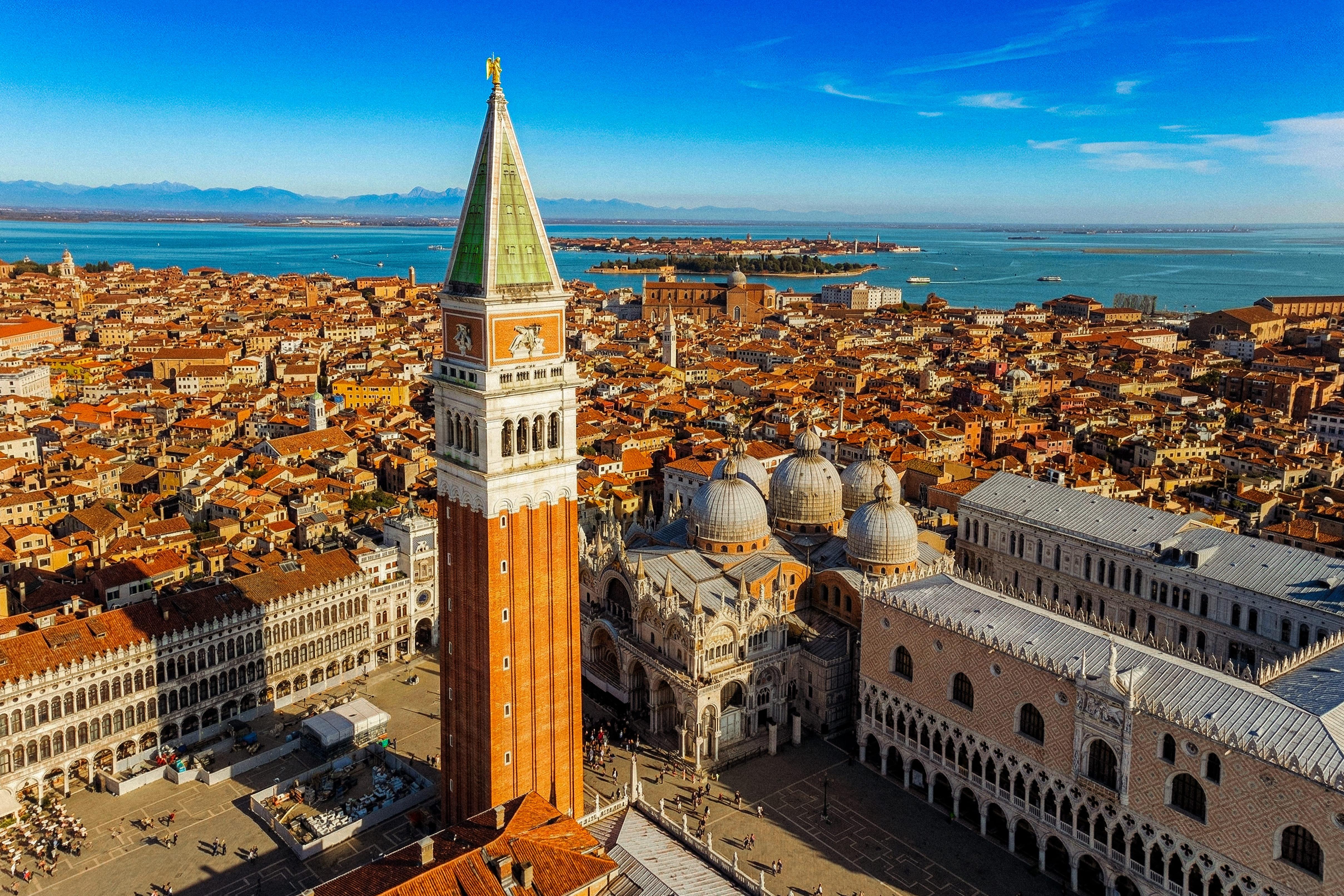
St Mark's Basilica, St Mark's Campanile, Piazza San Marco, and Museo Correr are all within a two-minute walk and combine easily with a Doge's Palace Tickets tour.
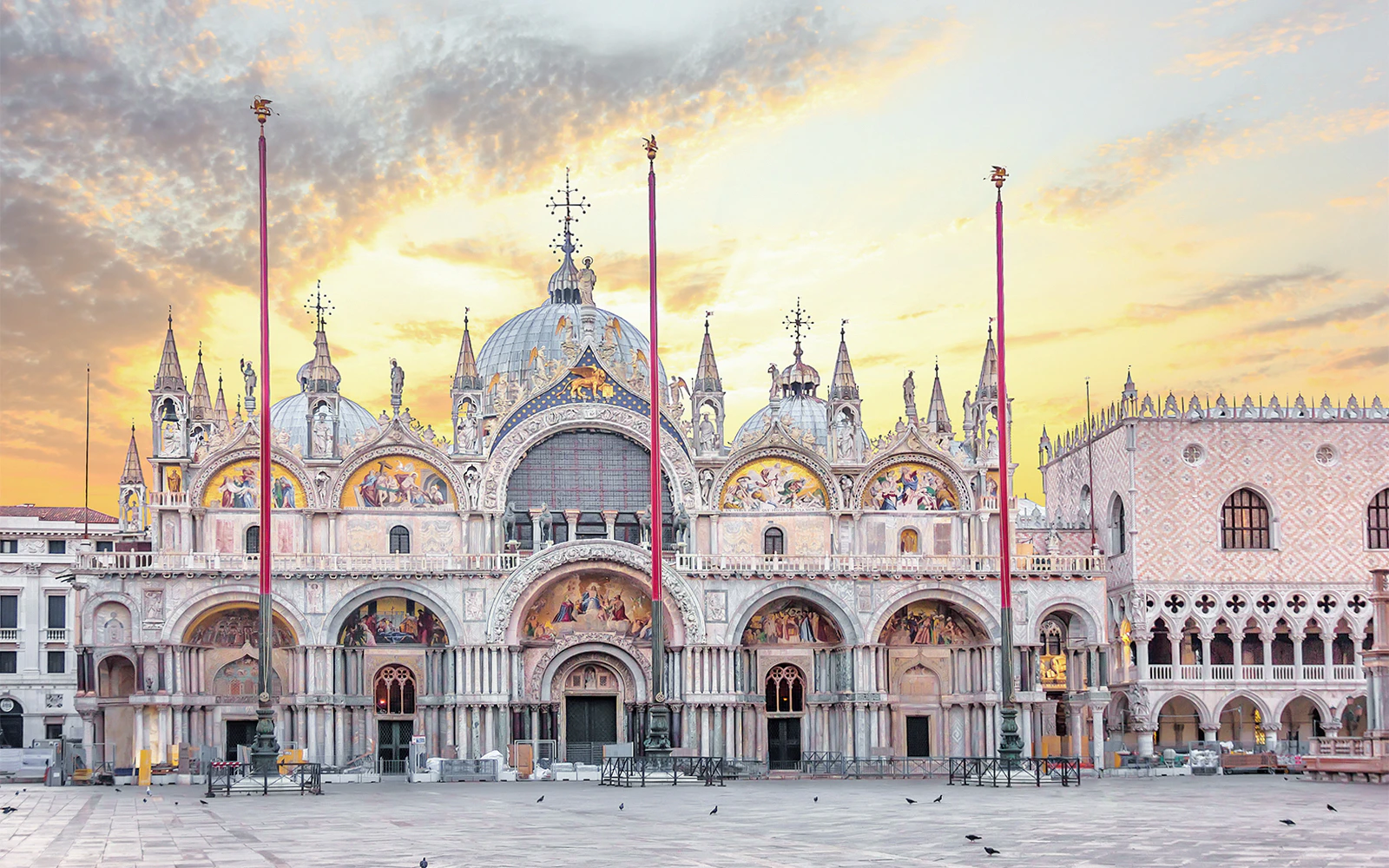
Byzantine-style cathedral with gold mosaics directly adjoining the palace on St Mark's Square.
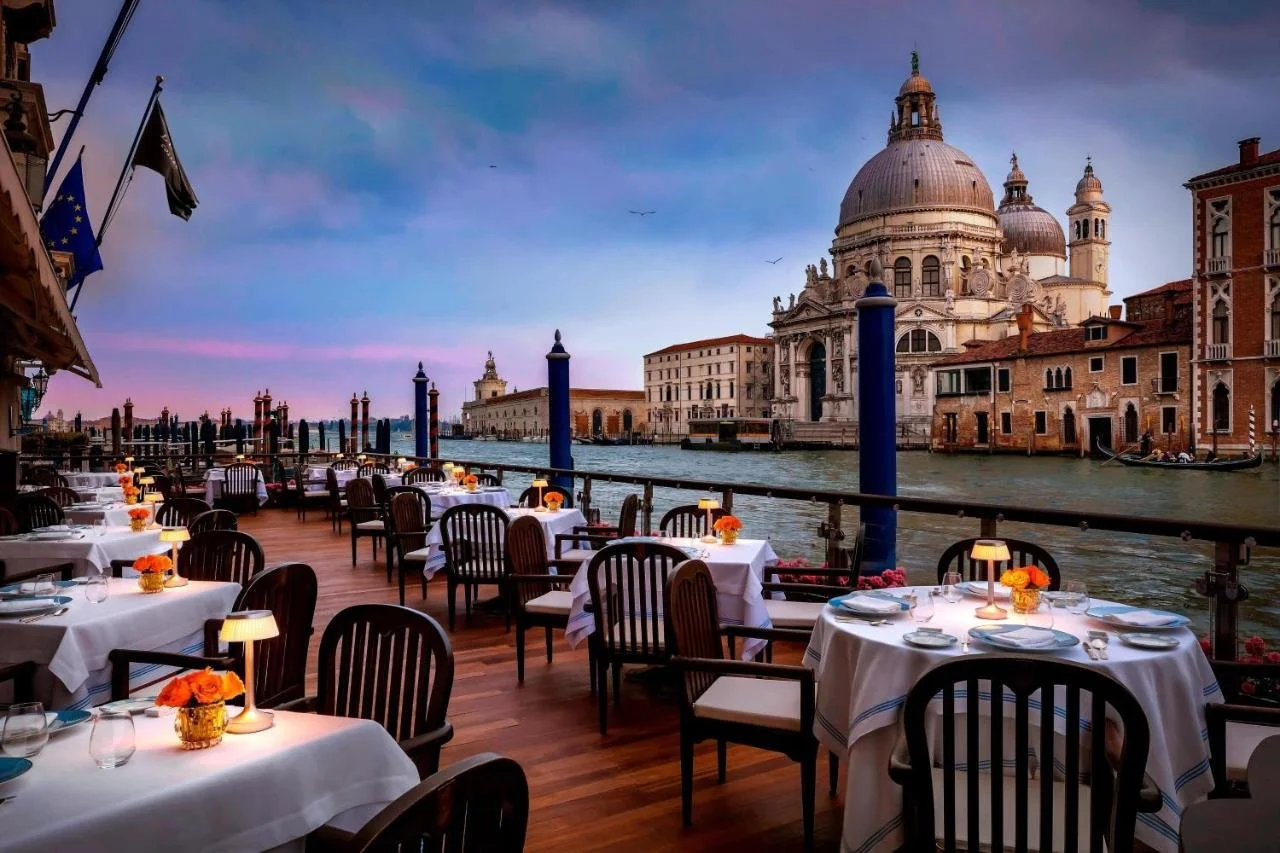
Grand Canal-facing 15th-century palazzo hotel near the Santa Maria del Giglio vaporetto stop.
Join thousands of happy travelers who have discovered this incredible experience
Book Your Experience Now